5 signs it's time to replace your car's window tint
Window tint needs replacing when it has turned purple or patchy, bubbled, scratched or started to peel, when it hazes the view out, or when the cabin gets as hot as it did before you tinted. One of those signs is enough. Film showing several of them at once is well past the point where anything but replacement helps.
Good film can go a long time before it needs attention. Cheap film, stretched film and film installed in a dusty garage cannot. These are the five signs we see most when owners bring a car in, and what each one says about the film on the glass.
1. The tint is fading or has changed color
Tint sits in the sun harder than almost anything else on the car. Dyed film breaks down under that exposure. The dye that made it dark loses its color, and a black film slides toward purple, brown or a patchy gray that does not match from one window to the next.
Once the color shifts, the film has stopped doing the job it was installed for. It no longer takes the edge off glare the way it did, and the cabin warms up faster. Color change is also the easiest sign to see from outside the car, so it is usually the one that makes an owner look at the glass in the first place.
2. There are bubbles in the film
Bubbles mean the adhesive has let go of the glass. Sometimes the cause is a poor install, where dust or moisture was trapped under the film on the first day. Sometimes the film itself was low quality and the adhesive gave up after a few summers. A do it yourself kit is a common source of both.
A few small bubbles in a fresh install can be moisture still working its way out, and those clear on their own as the film cures. Bubbles that show up months later, or that keep growing, are a different matter. They spread and they do not go back down.
3. The tint is scratched or peeling
A scratch that goes through the film can break its bond with the glass. The edges lift first, usually along the bottom of a door window where the glass slides past the seal. Once an edge is up, dirt gets underneath and the peel travels.
Peeling film does not repair itself, and the film has to come off and be replaced. The rear window needs particular care, because old film over a defroster grid should be removed properly and never scraped, or the grid lines can be damaged.
4. You cannot see well through it
Haze, distortion or a milky look makes it harder to see out, and the trouble shows up first at night and in the rain. Headlights scatter in damaged film and show as a glow or a smear across the glass.
If you catch yourself leaning to check a mirror, or squinting through the rear window to back up, the film is costing you visibility. That is a safety problem, and it is the sign we would act on soonest.
5. The car is hot again
Tint that has stopped working shows up as heat. If the cabin bakes the way it did before you tinted, or the seat belt buckle burns your hand when you get in, the film has lost its ability to reject heat. This often goes along with fading, though the heat can come back before the color visibly changes.
Film built on ceramic particles holds its performance far longer than dyed film. LLumar ceramic film is what we install when heat and glare are the main complaint, and it keeps its color and clarity.
What replacing window tint involves
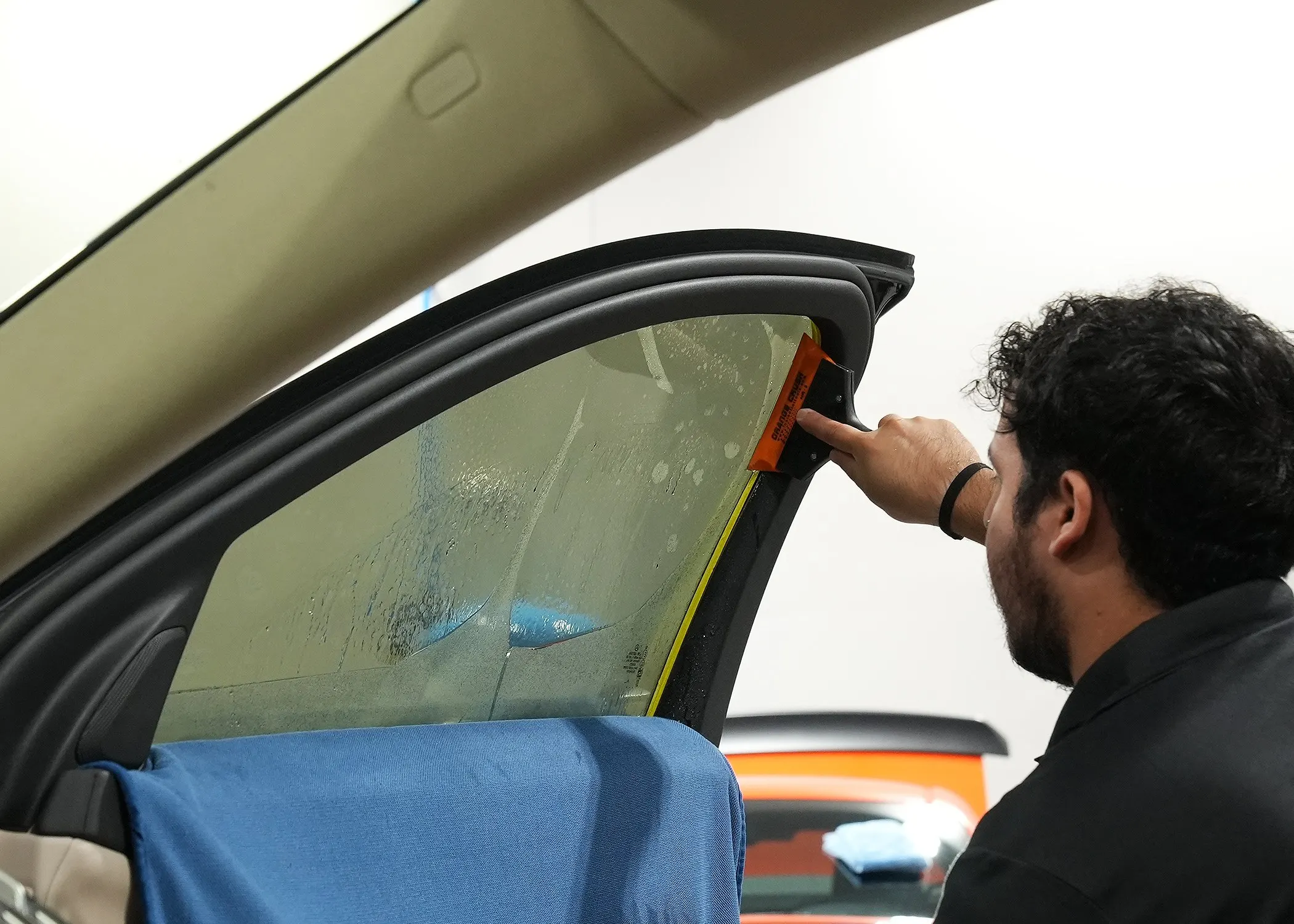
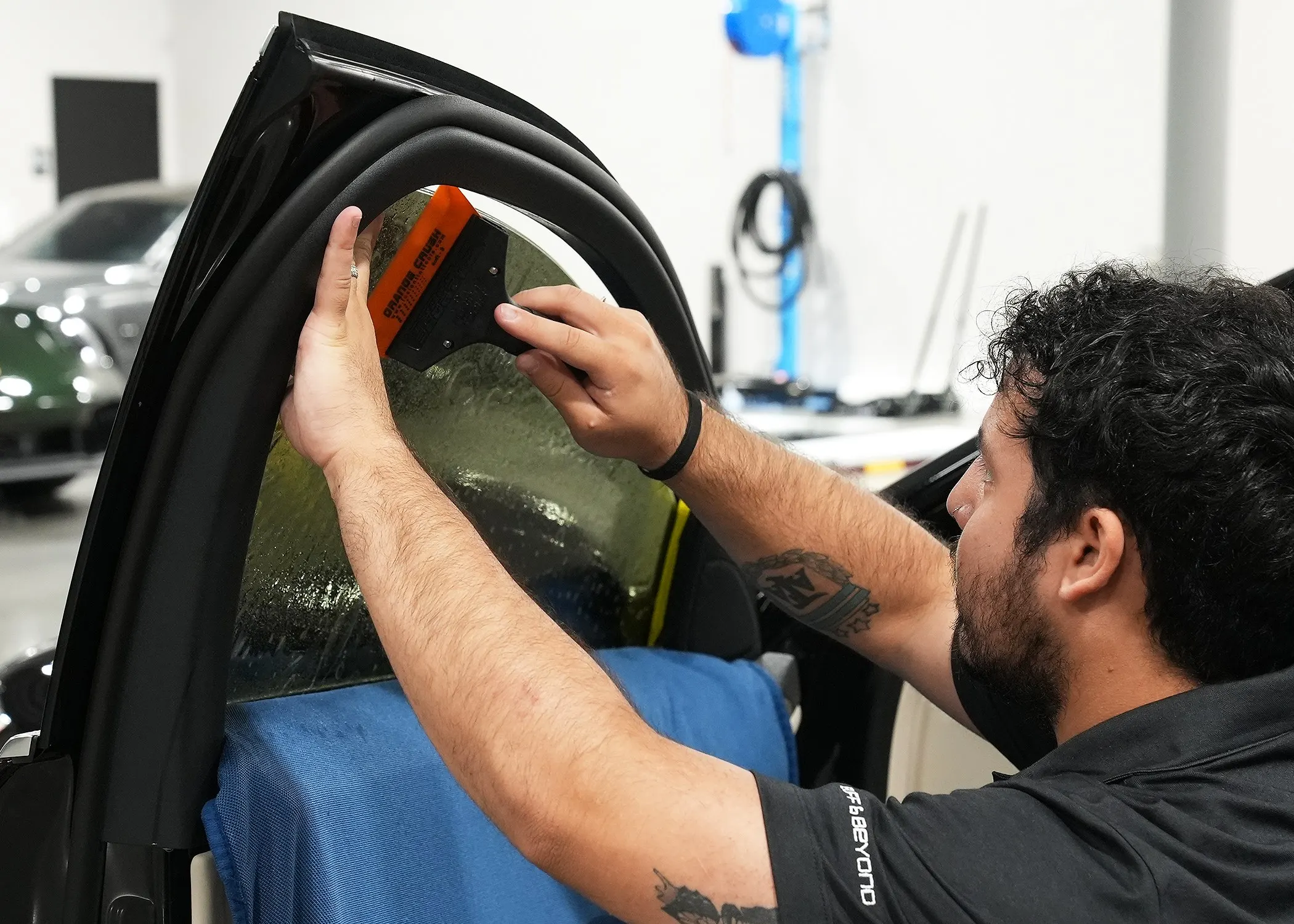
Old film has to come off before new film goes on. It is peeled from the glass, and then the adhesive it leaves behind is cleaned off completely. That step takes real time, and new film laid over leftover adhesive will show every flaw in it.
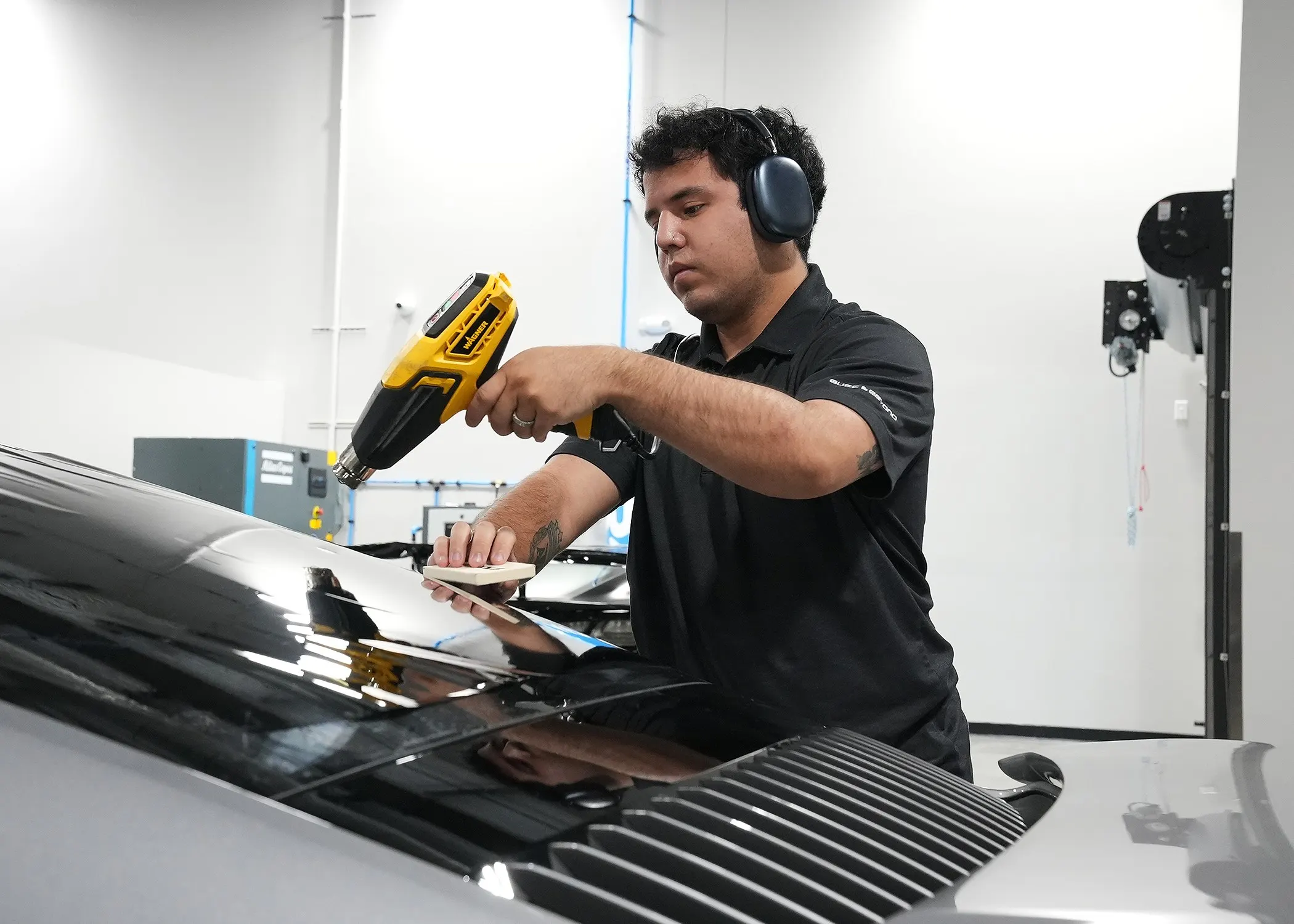
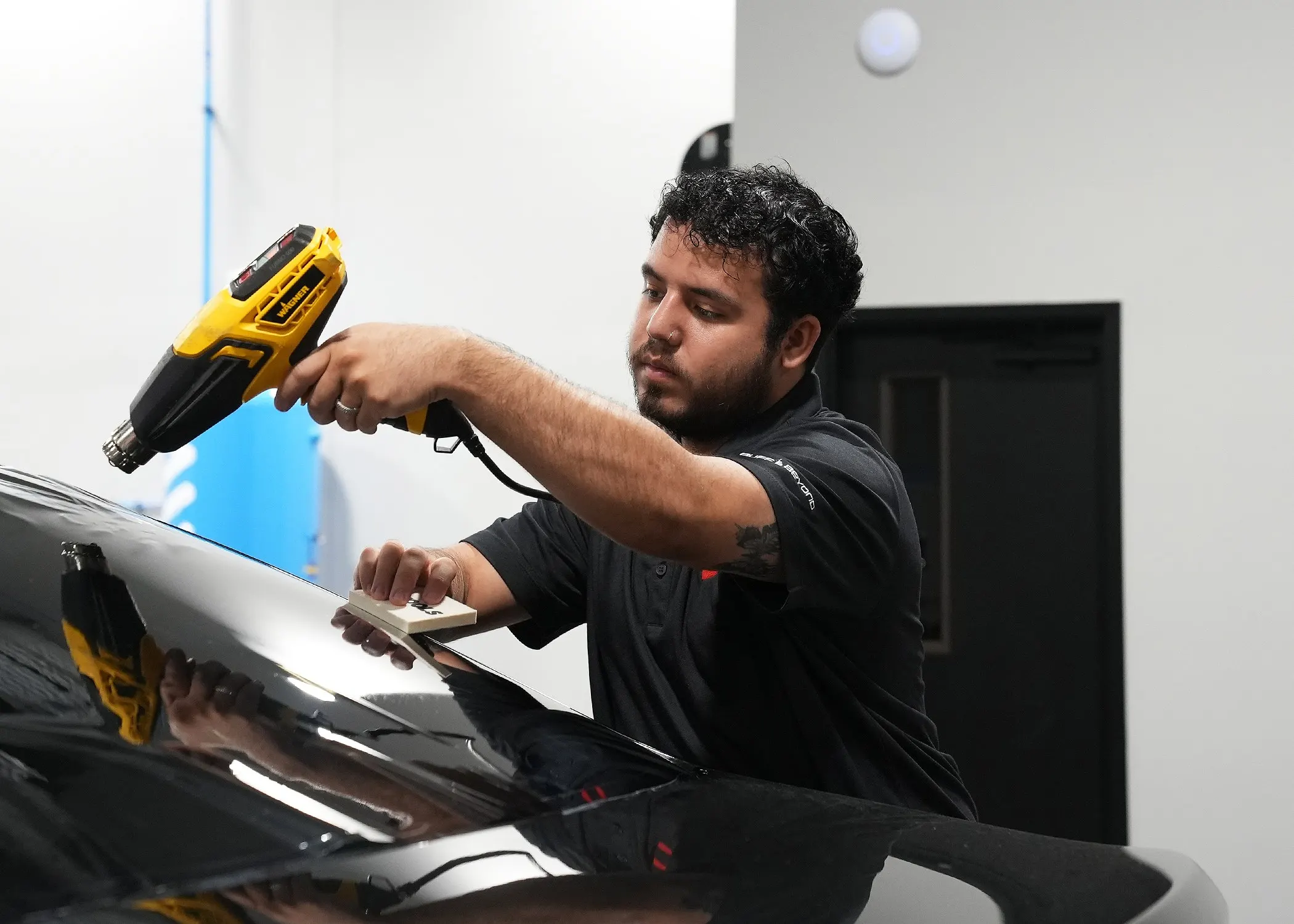
With the glass clean, the new film is cut to each window, applied and squeegeed down in a climate-controlled bay. Keeping dust out of the bay is a big part of why the finished windows look clean and flat. Every job is done in house by our full-time staff, at our shops in Millstone and Ocean Township.
Bring the car in and we will look at the film you have and tell you whether it needs to come off.
Choosing film when you replace it
Replacement is a chance to choose better film than the one that failed. Dyed film is the usual reason owners come back. Ceramic film does its work with ceramic particles, so it has no dye to fade and no metal to interfere with phone, GPS or radio signals. Our page on what ceramic window tint is covers how it works.
You can change the shade as well. Plenty of owners go lighter or darker the second time around. We install 70, 50, 35, 20 and 5 percent shades, and we can show you samples on your car before anything is cut.
Window tint replacement questions
How long does window tint last before it needs replacing?
There is no fixed number. Dyed film can fade, turn purple or bubble after a few summers outdoors, while ceramic film is built to hold its color and clarity for years. Where the car is parked and how well the film was installed matter as much as the film itself.
Can I replace just one window?
Yes, if the rest of the film is in good shape. New film sits next to old film, though, and a fresh window beside a faded one will look off. If the other windows are close to the end of their life, doing the whole car gives you a matched result.
Can bubbled tint be fixed without replacing it?
Usually not. A bubble is a spot where the adhesive has let go. Pricking it lets the air out, but the bond does not come back, and the film tends to lift again.
How long before I can roll my windows down after new tint?
The film needs a few days to cure against the glass. We tell you how long to wait when you pick up the car, since it depends on the weather.