Is ceramic window tint worth it?
For most drivers, yes. Ceramic tint costs more than dyed or basic film, and in return it keeps the cabin cooler, holds its color, leaves your phone and GPS alone and lasts. If the car lives outdoors, sees summer traffic or has a lot of glass, the difference shows up every day.
Whether it is worth it for you depends on what you want from the tint. This page goes through what the extra money buys, who benefits most, and the few cases where a cheaper film is a fair choice.
What you pay more for with ceramic tint
The price gap comes from the film. Ceramic tint is built with ceramic particles in the layers of the film. Those particles do the work that dye or metal does in cheaper films, and they do it without the drawbacks of either.
Dyed film is the basic option. It darkens the glass, and the dye fades in the sun until the film turns purple and bubbles. Metallic film resists fading, yet the metal can interfere with phone, GPS and radio signals. Ceramic film has no dye to fade and no metal to get in the way.
Heat rejection you can feel
Infrared light is the part of sunlight you feel as heat. Ceramic film is built to reject a good share of it, so the seats, the steering wheel and the air in the cabin all stay cooler. You notice it getting into a car that has sat in a lot, and you notice it again when the air conditioning does not have to work as hard in slow traffic.
This is where ceramic film separates from the rest. A dyed film and a ceramic film in the same shade can look identical from outside and feel completely different inside.
Signals and electronics
Cars carry more antennas and sensors than they used to, and drivers lean on phone navigation, toll readers and key fobs. Metallic film can weaken any of them. Because ceramic film is non-metallic, everything works as it did before the tint went on.
Interior protection
Ultraviolet light fades dashboards, cracks trim and dries out leather. Ceramic film filters it, which keeps the interior looking better for longer, and it takes some of the exposure off you on the road. A dashboard that has faded to gray and started to crack is the damage it slows down.
A clear view and a clean look
Ceramic film stays clear. Looking out through it, the view is sharp, even at night on the lighter shades. From outside, a clean install with tight edges and no bubbles makes the glass look like it came that way.
Who gets the most from ceramic tint
- Daily drivers that park outside at home or at work.
- Anyone who commutes or sits in summer traffic.
- Cars with large windows or a lot of glass, which take in more sun.
- Owners who rely on phone navigation, toll readers or keyless entry.
- Anyone who plans to keep the car and wants the film to look right years from now.
When a basic film may be enough
A garaged weekend car that rarely sees the sun is a fair candidate for a less expensive film, especially if privacy is the only goal. Even then, dyed film is the type that fades and bubbles, so it is worth asking what condition you want it in down the road.
The honest comparison is replacement. Cheap film that fails means paying to remove it and paying again for new film. Our page on signs it is time to replace window tint shows how that usually goes.
The full cost of cheap film
The sticker price of tint is only the first payment. Dyed film that purples and bubbles has to be stripped, the leftover adhesive has to be cleaned off every window, and then the car is tinted a second time. Removal is slow work, and it is a charge you would not have had with film that held up.
Add the summers spent with a hot cabin and a faded dashboard, and the cheaper film is often the more expensive one by the time you are done. Ceramic film is the one you install once. Our page on what affects window tint cost explains how the price of a job is built.
Caring for ceramic tint
Care is simple. Clean the inside of the glass with a non-abrasive glass cleaner and a soft microfiber cloth, and skip anything with ammonia, which can break down film over time. Keep the windows up for the few days the film needs to cure, and we tell you exactly how long when you pick up the car.
If you ever see bubbles, peeling or discoloration, bring the car in and we will look at it.
How we install ceramic tint
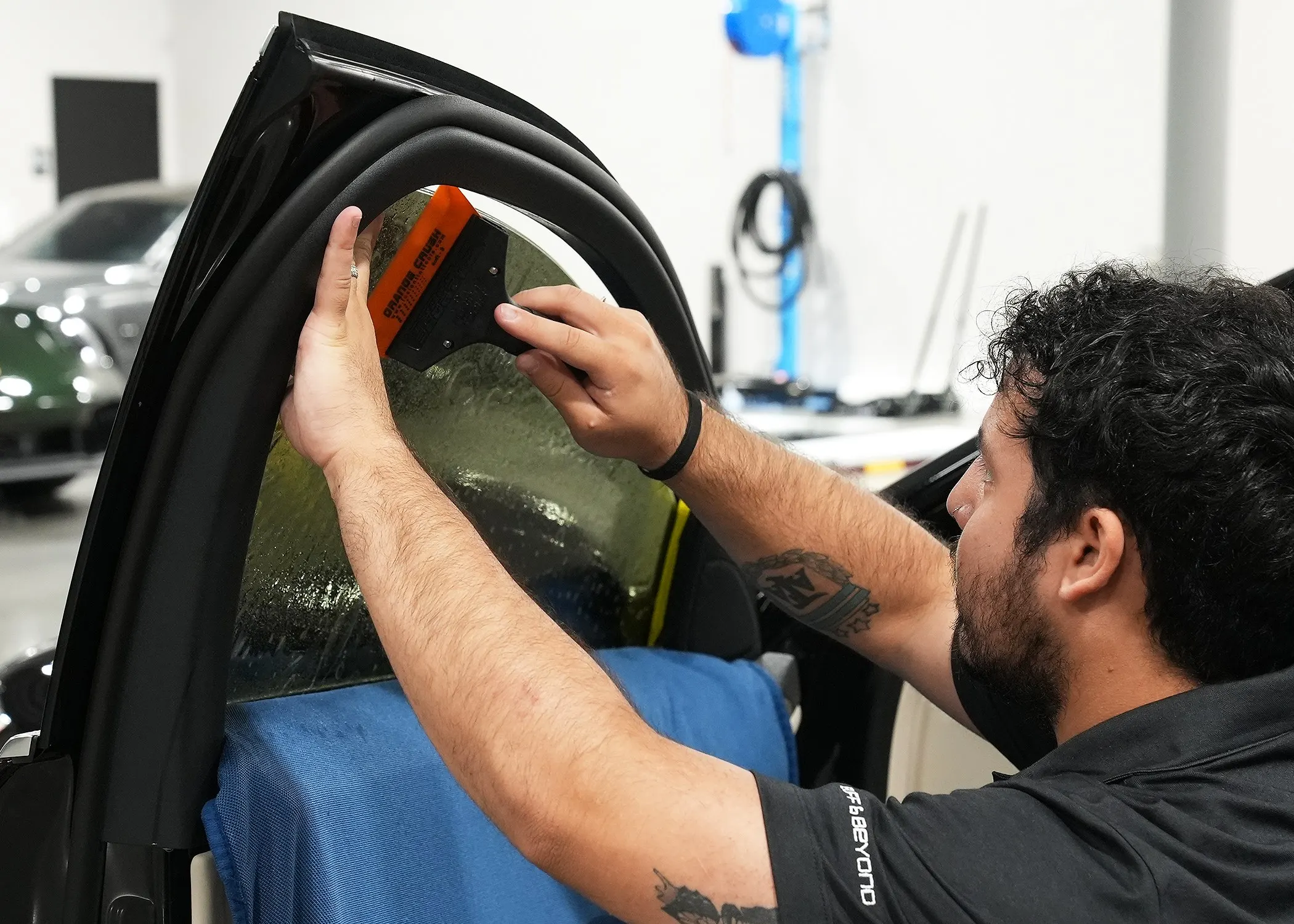
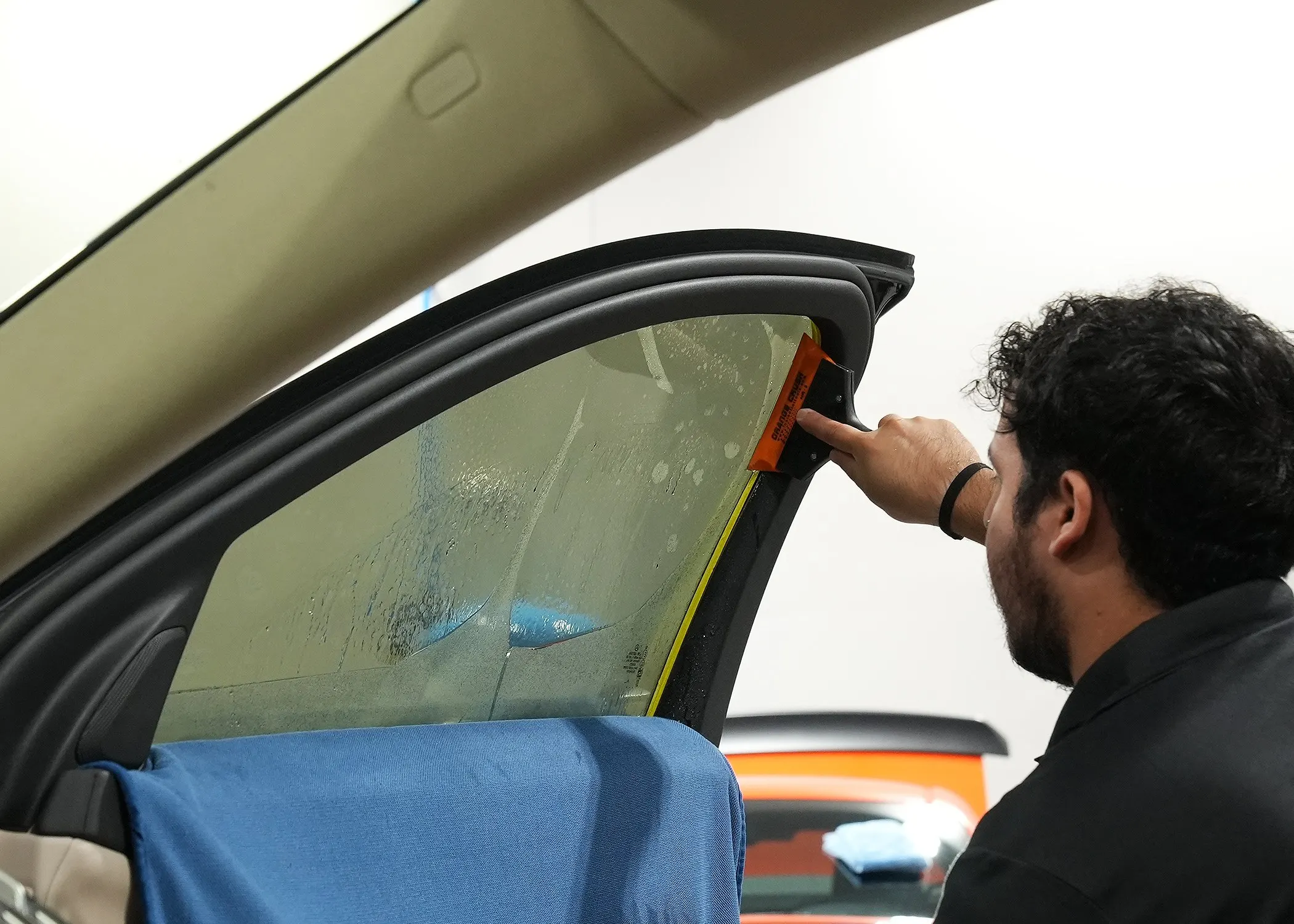
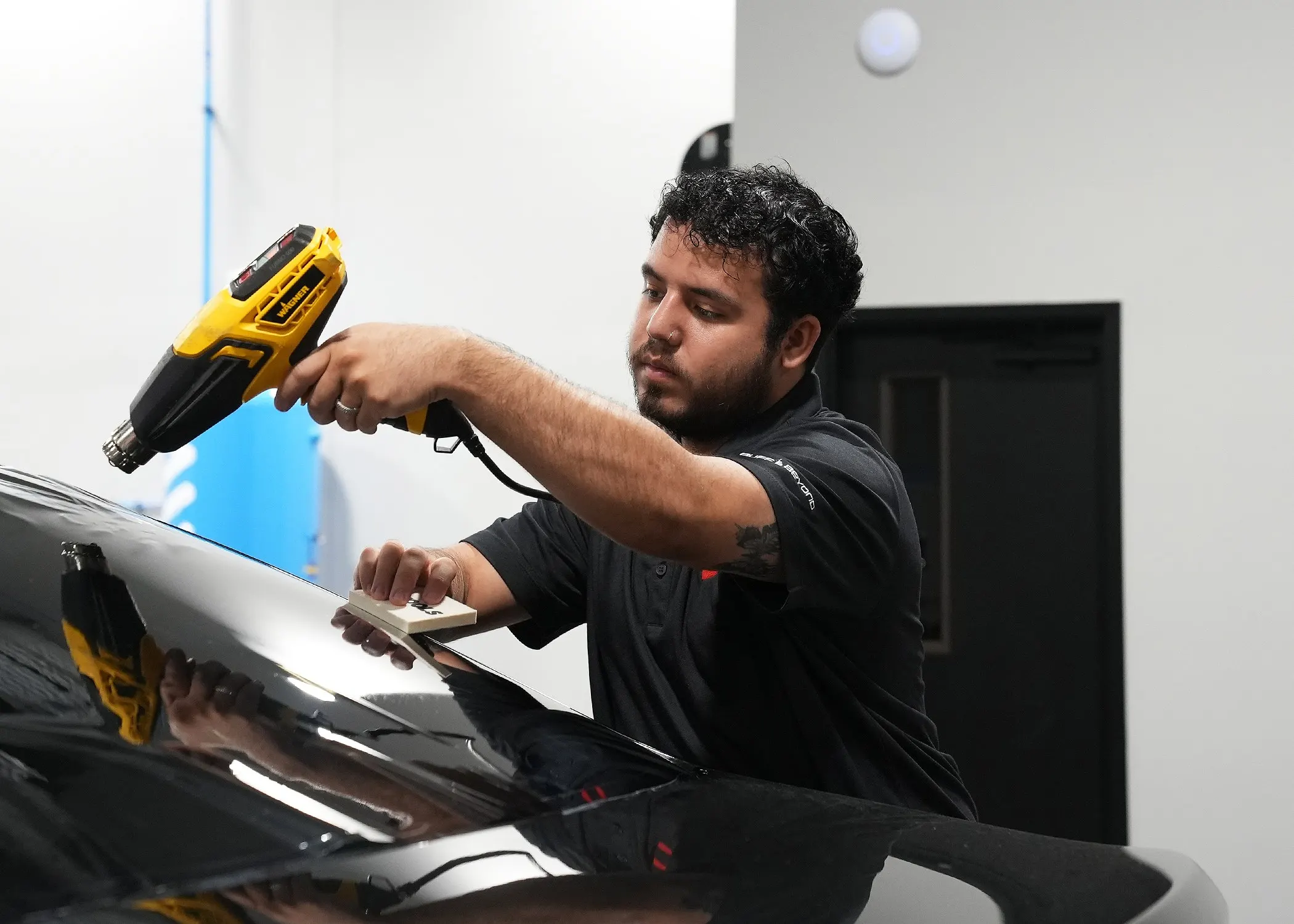
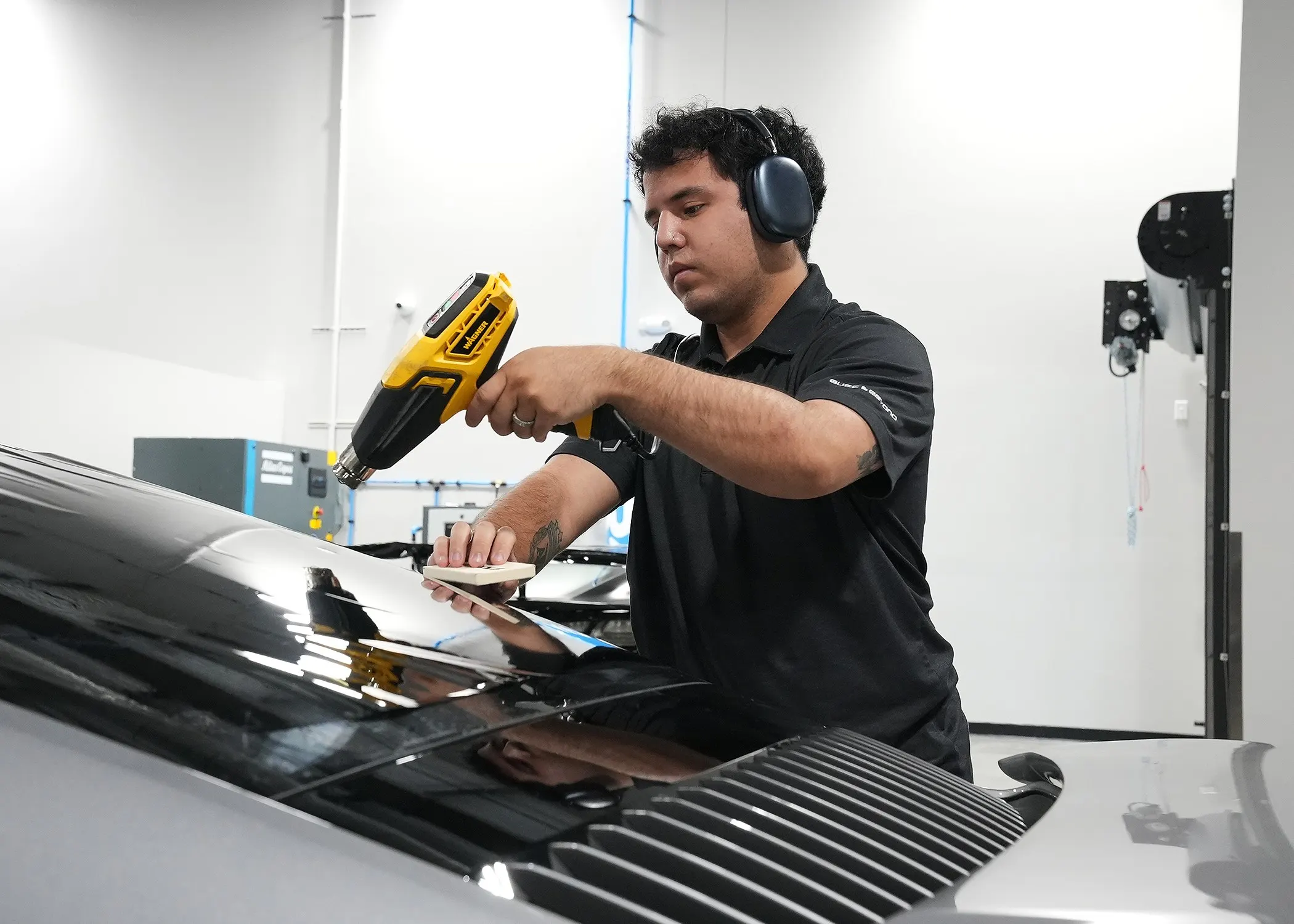
We install LLumar ceramic film at both shops. Our full-time staff does every job in house, in climate-controlled bays, so dust stays out of the film. We install 70, 50, 35, 20 and 5 percent shades, and we can show you samples on your car before anything is cut.
Install quality counts as much as the film. A premium film with a rushed install still bubbles and lifts at the edges, and that is why we keep the work in house.
Ceramic window tint questions
Is ceramic tint better than carbon tint?
Carbon film is a step up from dyed film. It does not fade the same way and it does not interfere with signals. Ceramic usually rejects more infrared at the same darkness and tends to look clearer, which is why it is the film we install. Our page on why ceramic window tint is the best choice compares them in detail.
Does ceramic tint have to be dark to work?
No. The heat rejection comes from the particles in the film, so a lighter shade can still make a real difference. You can choose the shade for how the car looks and how well you see through it.
Is ceramic tint worth it on a leased or older car?
On a car you will drive for a few seasons, it protects the interior while you own it and makes summer easier to live with. On an older car it keeps the interior from aging further, which also helps when it is time to sell.
Will ceramic tint fade or turn purple?
Ceramic film does not use dye, so there is no dye to break down. It is made to hold its color and clarity for years.