How window tint makes your car more comfortable
Window tint makes a car cooler, calmer and easier to drive in, and it protects what is inside from the sun. The benefits are less heat in the cabin, less glare, interior materials that age more slowly, more privacy and glass that holds together if it breaks. The quality of the film decides how much of that you actually get.
Most people tint for looks and keep the tint for comfort. After one summer with it, bare glass feels like a downgrade. Here is what the film does and where you notice it.
Less heat in the cabin
A car parked in the sun in July turns into an oven. Sunlight comes through the glass as visible light and as infrared, which is the part you feel as heat. Window film absorbs and rejects a share of that before it reaches the seats, the steering wheel and you.
The practical result is a cabin that is easier to get into after sitting in a lot, and that cools down sooner once the air conditioning is on. The air conditioning does not have to work as hard, which is a small comfort in summer traffic and a bigger one on a long drive.
Protection for the interior
Sunlight is what ages a car interior. It fades dashboards, dries out leather and discolors upholstery, and heat makes plastics brittle over time. Tint filters the ultraviolet light that drives much of that damage, and it takes heat out of the cabin too. Our page on interior sun damage goes through what happens to each material.
Film also helps protect the people inside. On a long drive the sun comes through the side window onto an arm and a shoulder for hours, and tint takes some of that exposure away.
Less glare
Low sun, bright pavement and headlights behind you all strain your eyes. Tint takes the edge off, so you squint less and keep your eyes on the road. It makes the most difference at sunrise and sunset, when the sun sits right at windshield height.
Film across the top of the windshield, called a window strip, is a popular way to deal with that low sun without touching the view straight ahead.
More privacy
Tinted glass makes it harder to see what is inside the car. A bag on the back seat, a laptop or a gym kit is less obvious to someone walking through a parking lot. It also gives you some privacy in traffic and when you are parked and waiting.
How private the cabin feels depends on the shade you choose. Our guide to choosing a window tint shade explains how each one looks and drives.
Glass that holds together
Tint film is a tough layer bonded to the glass. If a side window breaks, the film helps hold the pieces together, which reduces the risk of loose shards. Few people tint for this reason, and it is a good thing to have in the background.
A finished look
Tint ties the glass to the paint. A tinted car looks more deliberate, whether it is a daily driver or a weekend car, and a clean install with tight edges looks like it came that way from the factory.
Not every film does all of this
The benefits above depend on the film. Basic dyed film darkens the glass and does little against heat. It can also fade, bubble and turn purple. Ceramic film does the heat work with ceramic particles, so it holds up in the sun and has no metal that could interfere with signals. Our page on why ceramic window tint is the best choice compares the types.
How we do window tint at Buff & Beyond
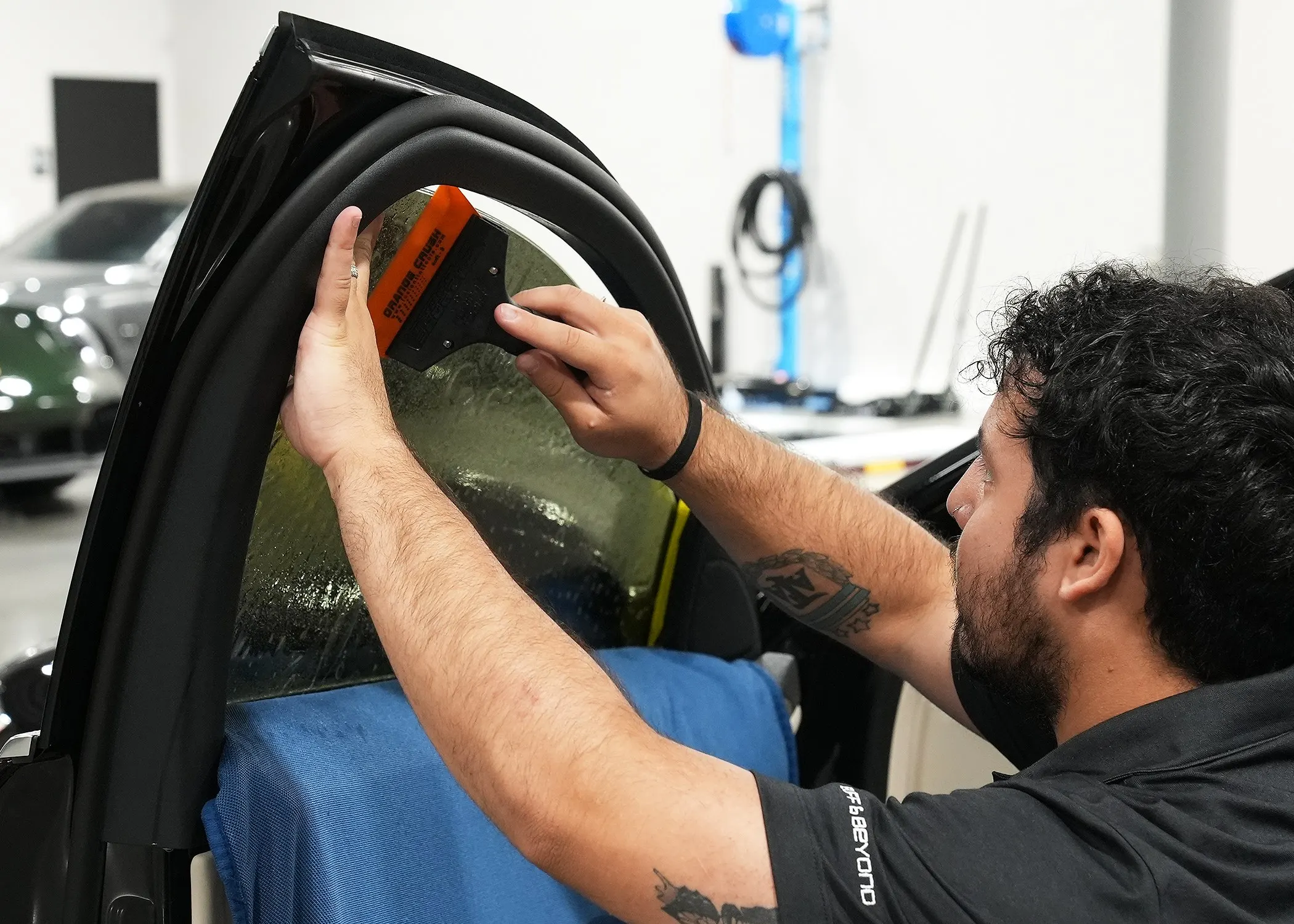
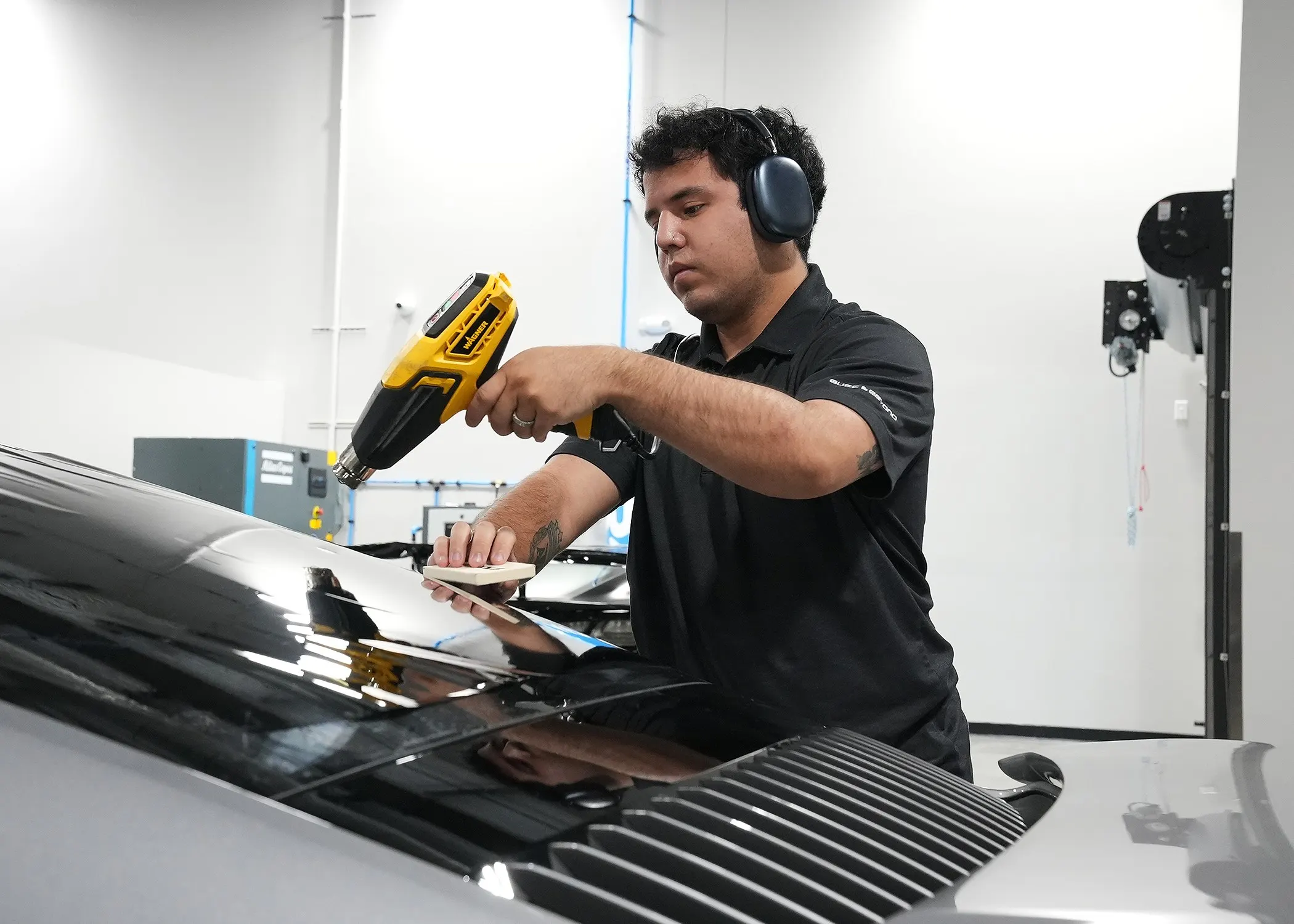
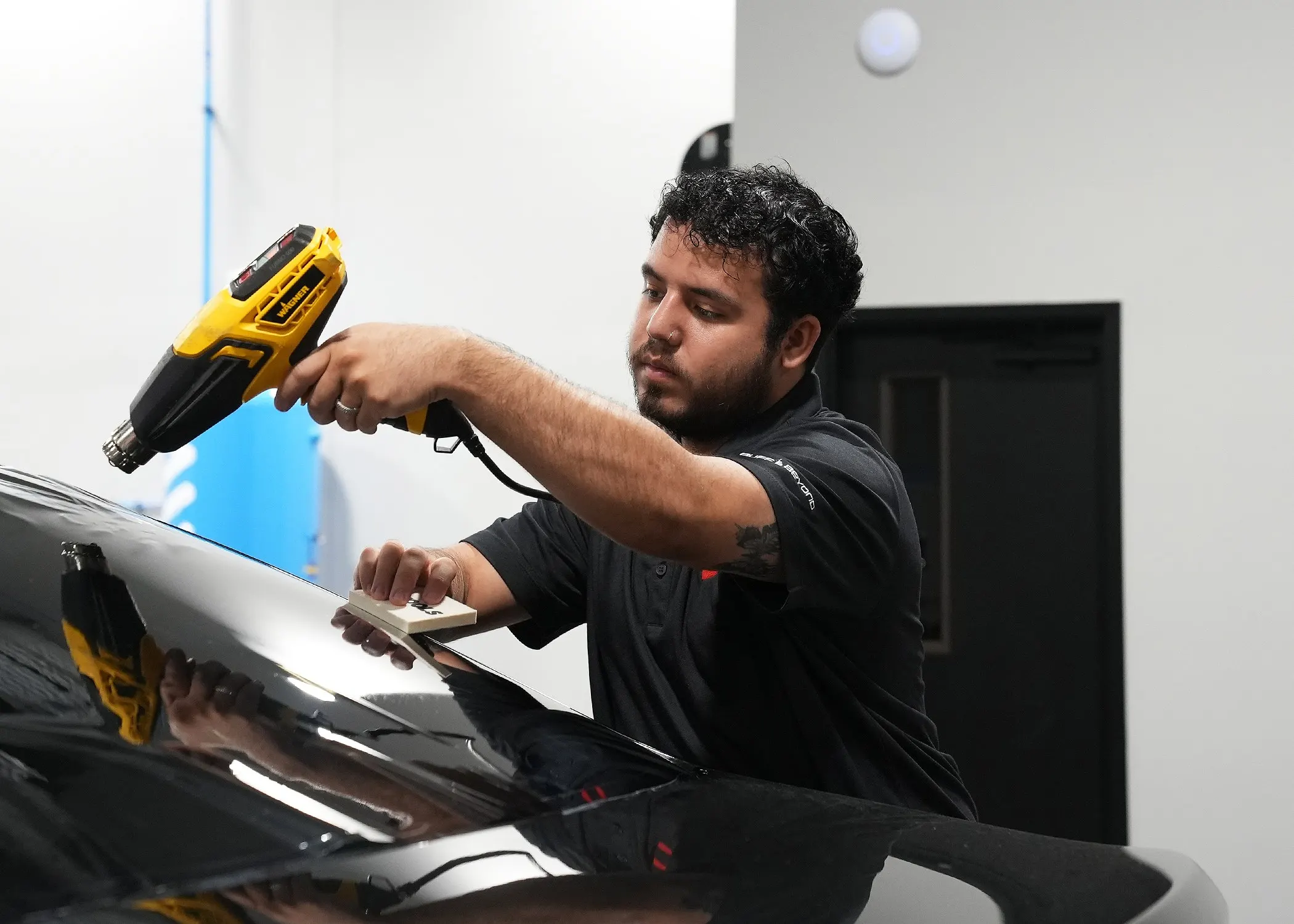
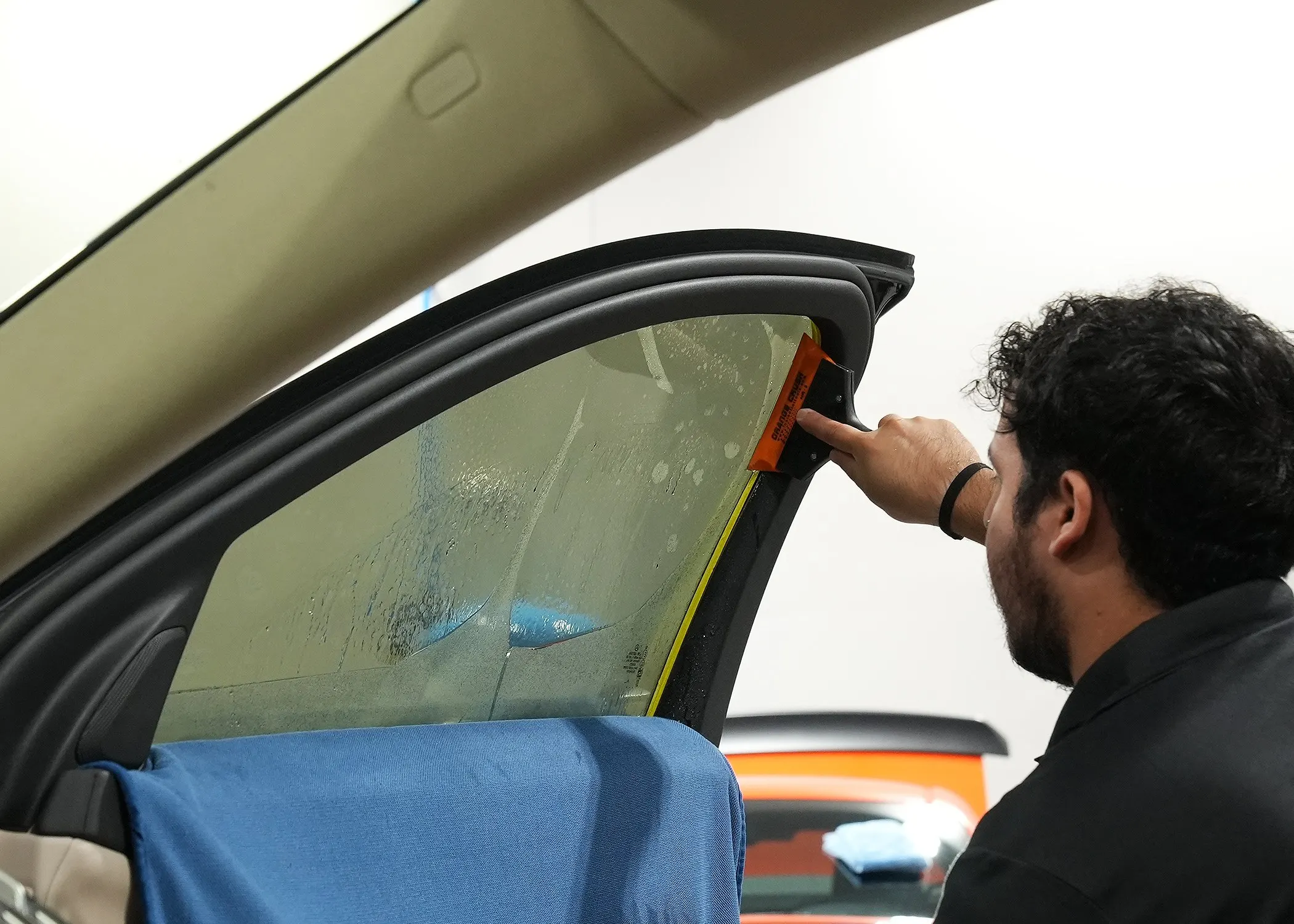
We install LLumar ceramic film in house. Our full-time staff prepares the glass and applies the film in climate-controlled bays, so dust stays out of the film.
You can tint as much or as little of the car as you want.
- Window Strip. The top of the windshield.
- Front Two Windows. The driver and passenger windows.
- Full Windshield. The whole windshield.
- All Sides and Rear Window. Every other piece of glass, a good fit for cars without factory privacy glass.
We help you choose a shade that suits the car and the way you use it, and we can show you samples on the glass before we cut.
Window tint benefit questions
Does window tint really keep the car cooler?
Yes. It will not make a parked car cold, though a tinted car is noticeably cooler to get into and cools faster. Ceramic film does the most because it is built to reject infrared.
Will tint make it hard to see at night?
A quality ceramic film stays clear from the inside, so night driving on the lighter and medium shades feels normal. The darkest shades do cut visibility after dark, which is one reason we talk through how and where you drive before you choose.
Does tint help in winter?
It protects the interior from winter sun just as it does in summer, and it still cuts glare off low winter light and snow. Heat is the benefit people notice most from June through September.
Can I tint a newer car?
Yes. A new car is a good fit, because the film protects the interior from the first day and the damage never gets a start.
Can I tint only the front windows?
Yes. The Front Two Windows package covers the driver and passenger glass, and you can add the windshield, the strip or the rest of the car later. Most of the sun on your arms and the dashboard comes through the front glass, so it is a sensible place to begin. We will go through the options for your car when you send the form.