Is your car's interior aging faster than it should?
If your dashboard looks faded, your leather feels dry or your trim has gone dull, the sun is the likely cause. Ultraviolet light and heat come through the glass every day and age the materials inside the car. Ceramic window tint filters much of that exposure and slows the damage, though it cannot reverse what has already happened.
Most owners protect the paint and forget the inside. The interior takes the same sun, all day, and nobody washes it off.
What the sun does to a car interior
Two things act on the cabin. Ultraviolet light breaks down dyes and the surface of materials, which fades color. Heat dries materials out and makes them brittle, which leads to cracks.
The change is slow, so it is easy to miss until it is obvious. Compare the top of the dashboard to the underside of the glovebox or the inside of a door pocket and you can see how much the sun has done.
What interior sun damage looks like
- A faded dashboard, sometimes with a chalky or sticky surface.
- Cracks along the dash, usually starting near the defroster vents.
- Dry leather seats that lose their smooth finish and start to crease and split.
- Faded or discolored fabric, often on one side of the seat.
- Weathered plastic trim that has gone gray and dull.
- A steering wheel that feels rough or looks worn at the top.
- A cabin that is very hot when the car has been parked.
Once the materials start to break down, they are hard to bring back. Prevention is the practical route.
Which parts of the interior take the most
The top surfaces take the worst of it, because the sun lands straight on them. The dashboard and the tops of the door panels are first. Seat shoulders and the back of the rear seat take it through the side and rear glass. Screens and trim near the windshield are exposed daily too.
A car that sits outside at home and at work gets that exposure every day. A garaged car gets far less, which is why two cars of the same age can have interiors in very different shape.
Why factory glass is not enough
Factory glass filters some ultraviolet light, but the side and rear windows still let in a lot of sun. Dark rear privacy glass looks protective, yet dark and heat rejecting are different things. The dye that darkens the glass does not necessarily control the infrared that heats the cabin.
The result is that a car can look shaded from outside and still bake inside. A car that sits outside every day takes the exposure daily.
How window tint helps
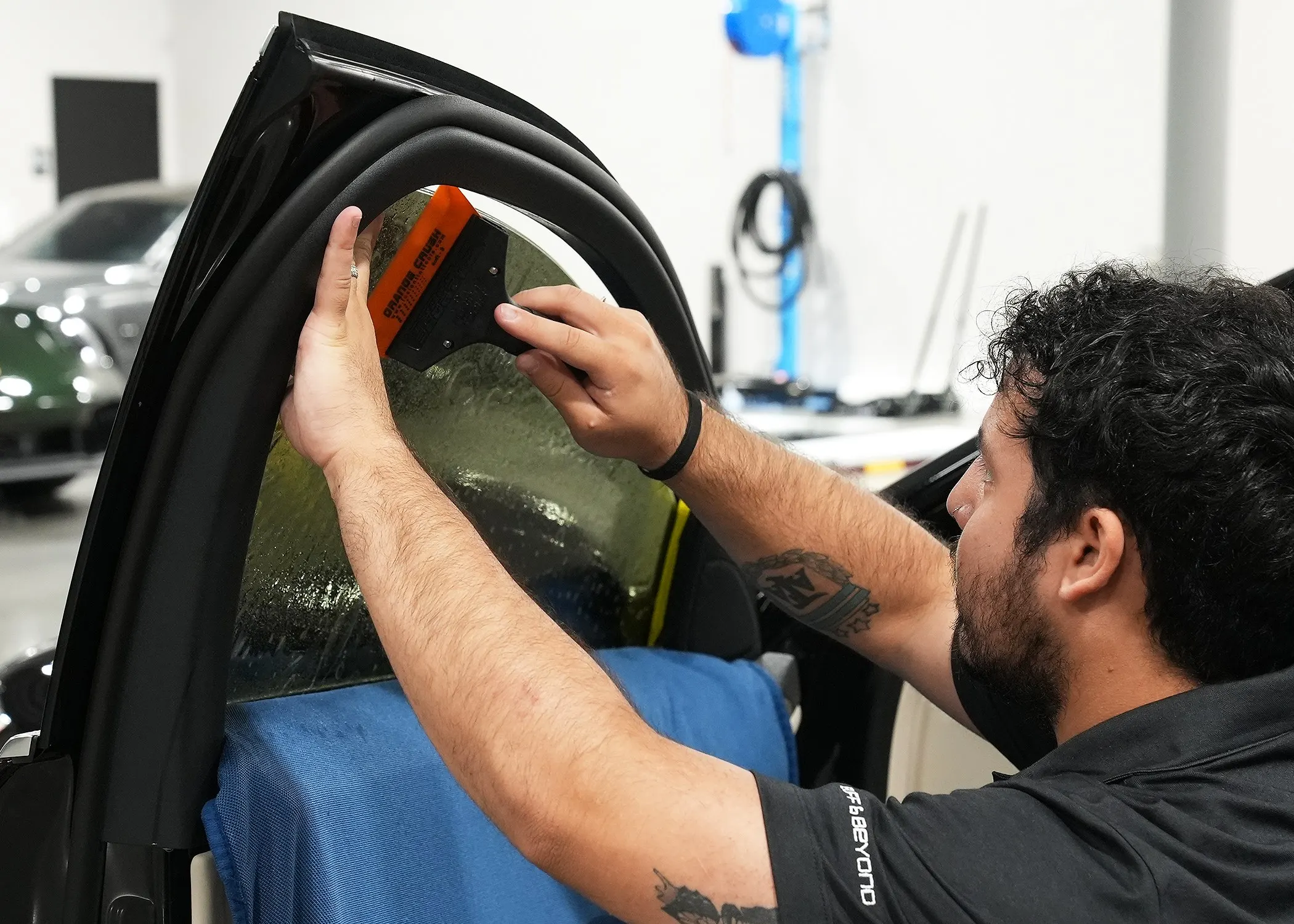
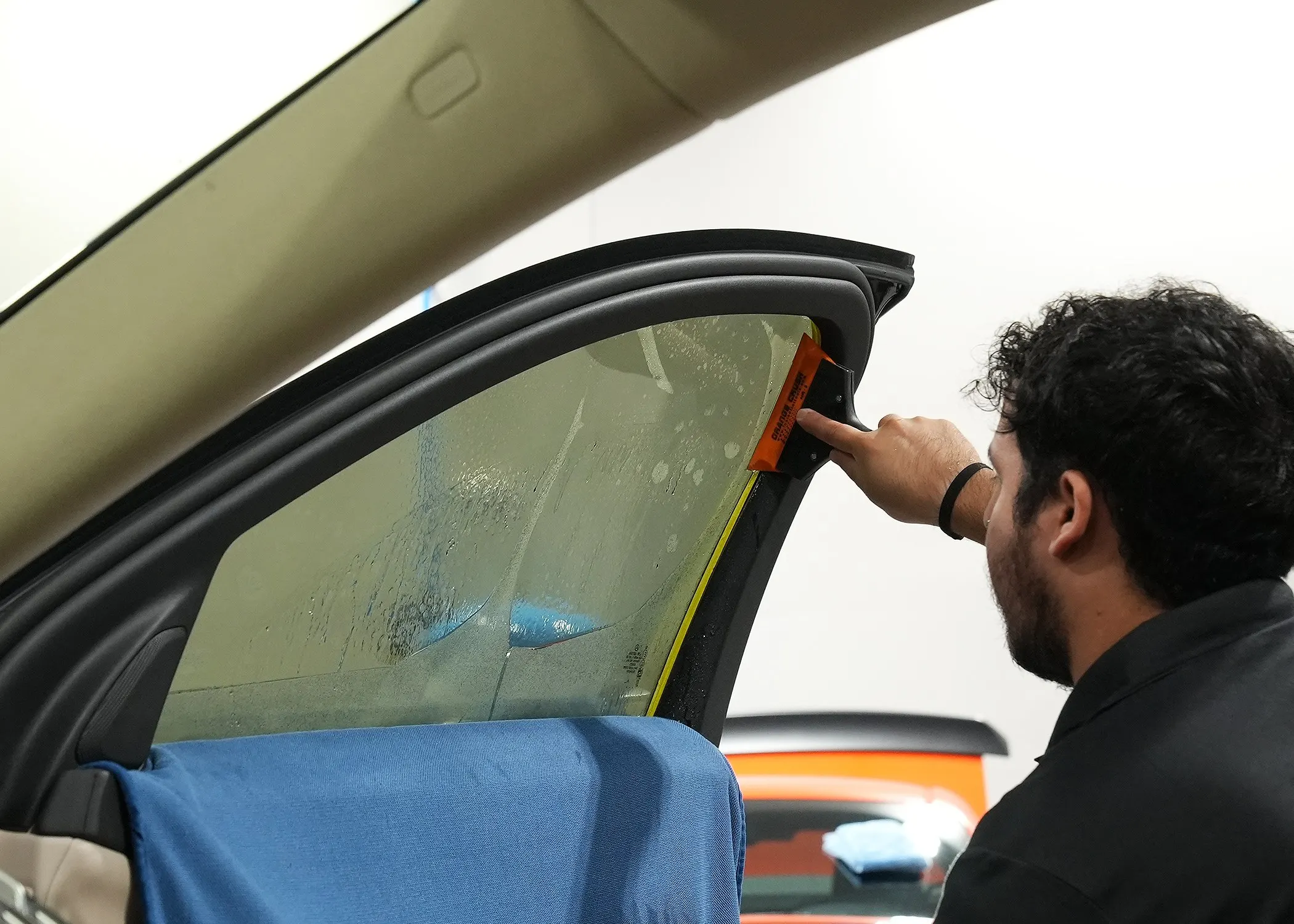
LLumar ceramic tint cuts the heat and ultraviolet light that reach your interior. The film is built with ceramic particles that reject infrared, so the cabin stays cooler, and it filters ultraviolet light, which is what fades and cracks surfaces. It also reduces glare, which makes the cabin easier to sit in on a bright day.
Tint will not stop all sunlight, and it is not meant to. It takes much of the strain off the materials, and that slows aging. The earlier it goes on, the more interior it protects. Our page on how window tint makes your car more comfortable covers the other benefits.
Other habits that help
Tint works best alongside a few habits. Use a windshield sunshade on days the car sits in the sun, since the windshield is the largest piece of glass. Park in shade or a garage when you can. Condition leather on a regular schedule with a product made for it, and wipe plastics with a cleaner that does not leave a greasy shine.
Each of those helps, and none of them works while the car is parked. Tint is the one that is on the glass all day.
Choosing a shade for interior protection
Darker is not always better. With ceramic film the protection comes from the particles, so a lighter shade can still do the work. Think about how you drive, how much you park outside and how you want the car to look. We install 70, 50, 35, 20 and 5 percent shades and show you samples on the car, so you can see the difference in daylight. Our guide to choosing a window tint shade goes through each one.
Tint at Buff & Beyond
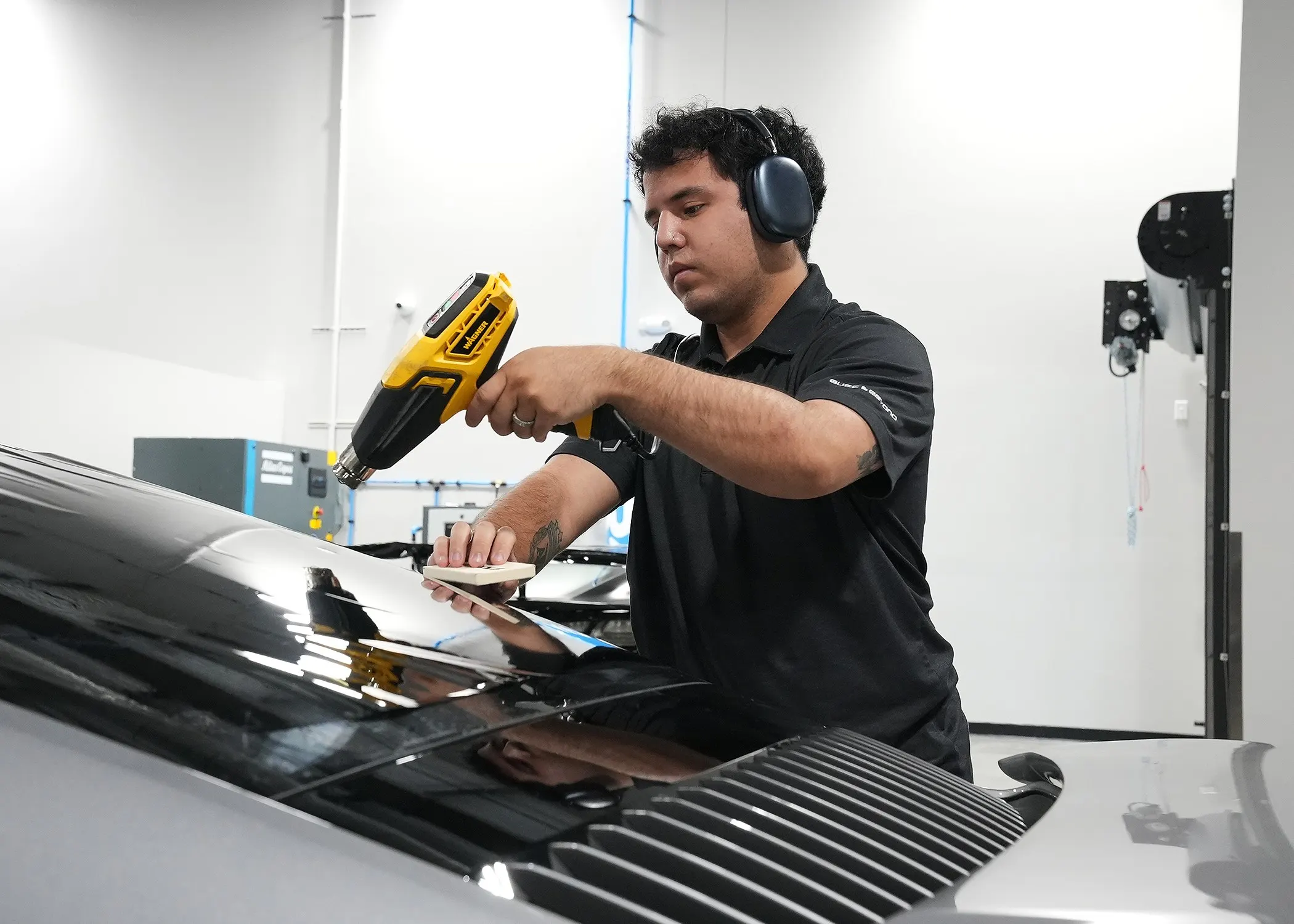
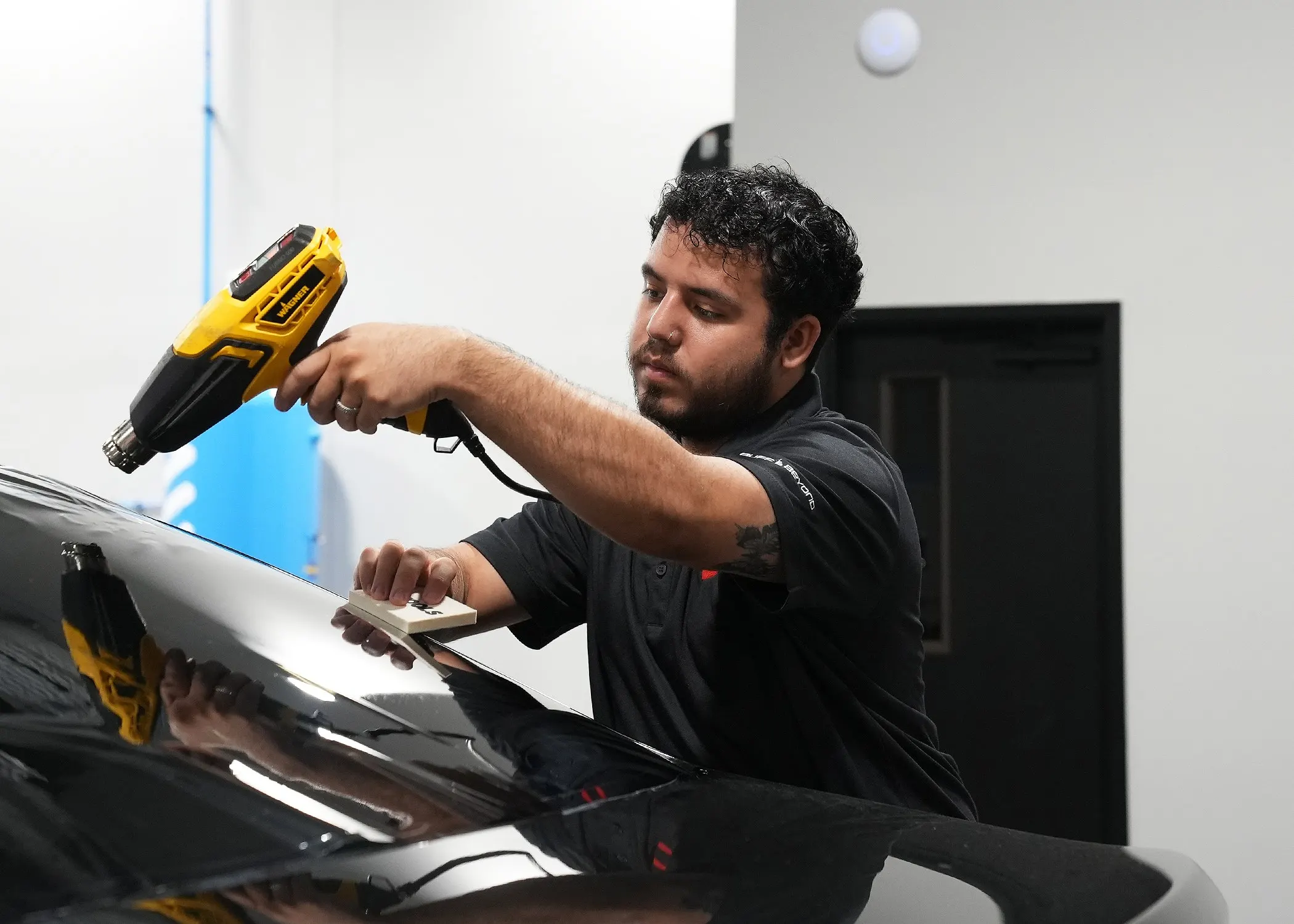
Our full-time staff installs every tint job in house, at both shops, in climate-controlled bays. We use LLumar ceramic film. If your car lives outdoors, tint is worth doing before the interior shows the wear.
Car interior sun damage questions
Does window tint stop a dashboard from cracking?
It slows the process, since it cuts the ultraviolet light and heat that cause it. No film stops it entirely, and a dashboard that is already cracked will not heal. Earlier is better.
Can tint reverse sun fading that has already happened?
No. Faded color and dry leather stay as they are. Tint protects what is left and keeps the damage from getting worse.
Should I tint a car I keep in a garage?
A garaged car gets far less exposure, so the case is smaller. If it comes out on sunny days for long drives, tint still helps with heat and glare.
Which windows matter most for interior protection?
The windshield and the front side windows put the most sun on the dashboard and seats. The rear glass protects the back seat and cargo area.