How New Jersey roads damage your car's paint
New Jersey roads wear down paint in four main ways: winter salt and brine, loose gravel and stone chips, grit from construction and potholes, and the grime that sits on the car between washes. Most owners do not notice until the front end is covered in chips and the lower panels look dull. The damage builds slowly, and it is much easier to prevent than to fix.
We see it every week on cars that come into the Millstone shop. Here is what is happening to the finish and what you can do about it.
Road salt and brine
New Jersey crews treat the roads heavily in winter. Before a storm they spray brine, and during and after it they spread salt. All of it ends up on your car. It clings to the lower doors, the rocker panels, the bumpers and the wheel arches, where it stays until the next wash.
Salt is corrosive. On clean, intact paint it mostly leaves a dull film. On a chip, a scratch or a rough edge, it reaches the metal underneath and starts rust. People also wash less when it is cold, so the residue can sit on the paint for weeks. A winter with a few storms leaves plenty of time for the damage to start.
Loose gravel and stone chips
Resurfacing work, sand from winter treatments and loose stone on the shoulder all end up under tires. The car ahead of you throws it back. Trucks and construction vehicles throw the most. At highway speed, a small stone hits the hood or bumper with real force, and I-195 and the Garden State Parkway serve the area.
A factory clear coat is thin, and it was never meant to stand up to a steady spray of stones. Once a chip breaks through, the paint underneath is exposed and the salt finds it. The front bumper, the leading edge of the hood, the mirrors and the lower doors are where it shows first.
Potholes and freeze thaw
Water gets into cracks in the road, freezes and breaks the surface open. That leaves potholes and loose chunks of asphalt that throw stones and grit up and out. Cars take the spray from the wheels in front, and a car that drops into a pothole can scuff the lower bumper and the wheel edges.
The same freeze and thaw cycle works on the car. Small chips and scratches fill with water, which freezes, expands and widens the opening. A tiny chip in November can be a bubble in paint by March.
Grime between washes
Road film is a thin layer of oil, brake dust, tar and salt that settles on a car in traffic. It dulls the finish, and it traps abrasive grit. Wiping it off dry with a towel grinds the grit across the paint, and a trip through an automatic brush wash does the same. Swirls are the result.
Sun and trees
Summer takes its turn. UV dulls the clear coat over time, and bugs, sap and bird droppings bake into the surface. Each of these is small, though together with the winter damage they put a finish under steady pressure all year.
What Millstone drivers can do
You cannot change the roads, so the answer is to protect the car and to wash it right.
Paint protection film for the front end
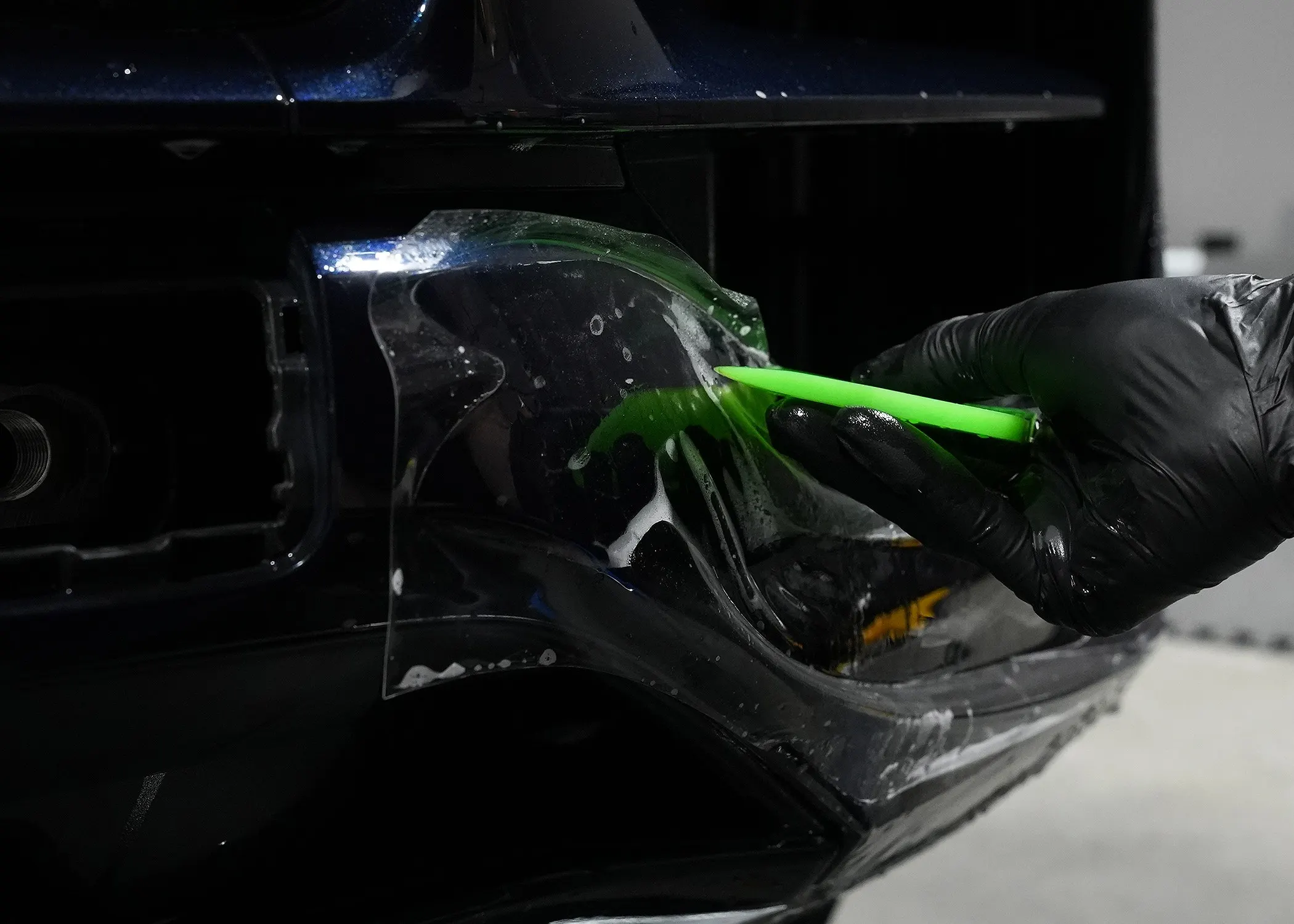
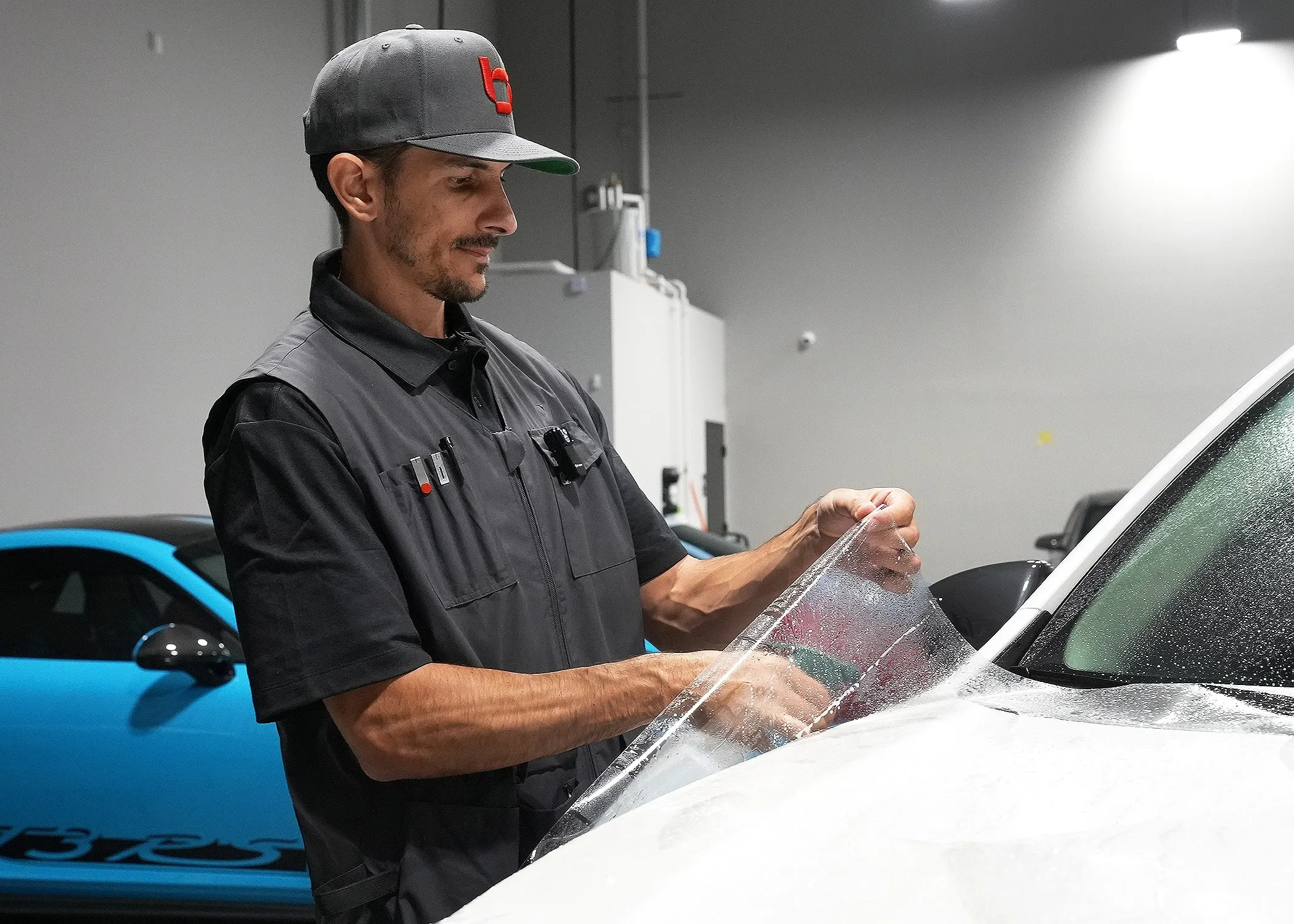
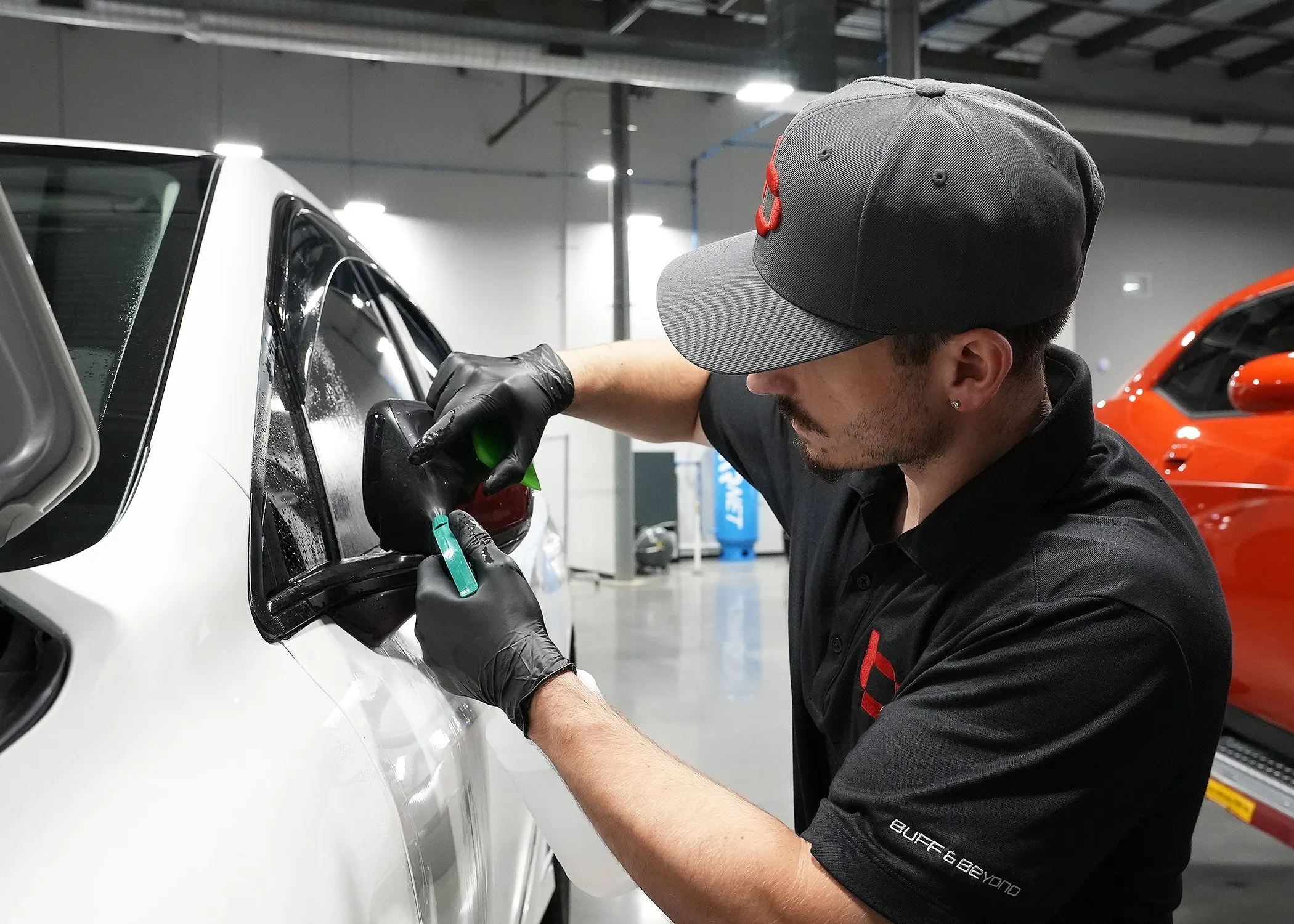
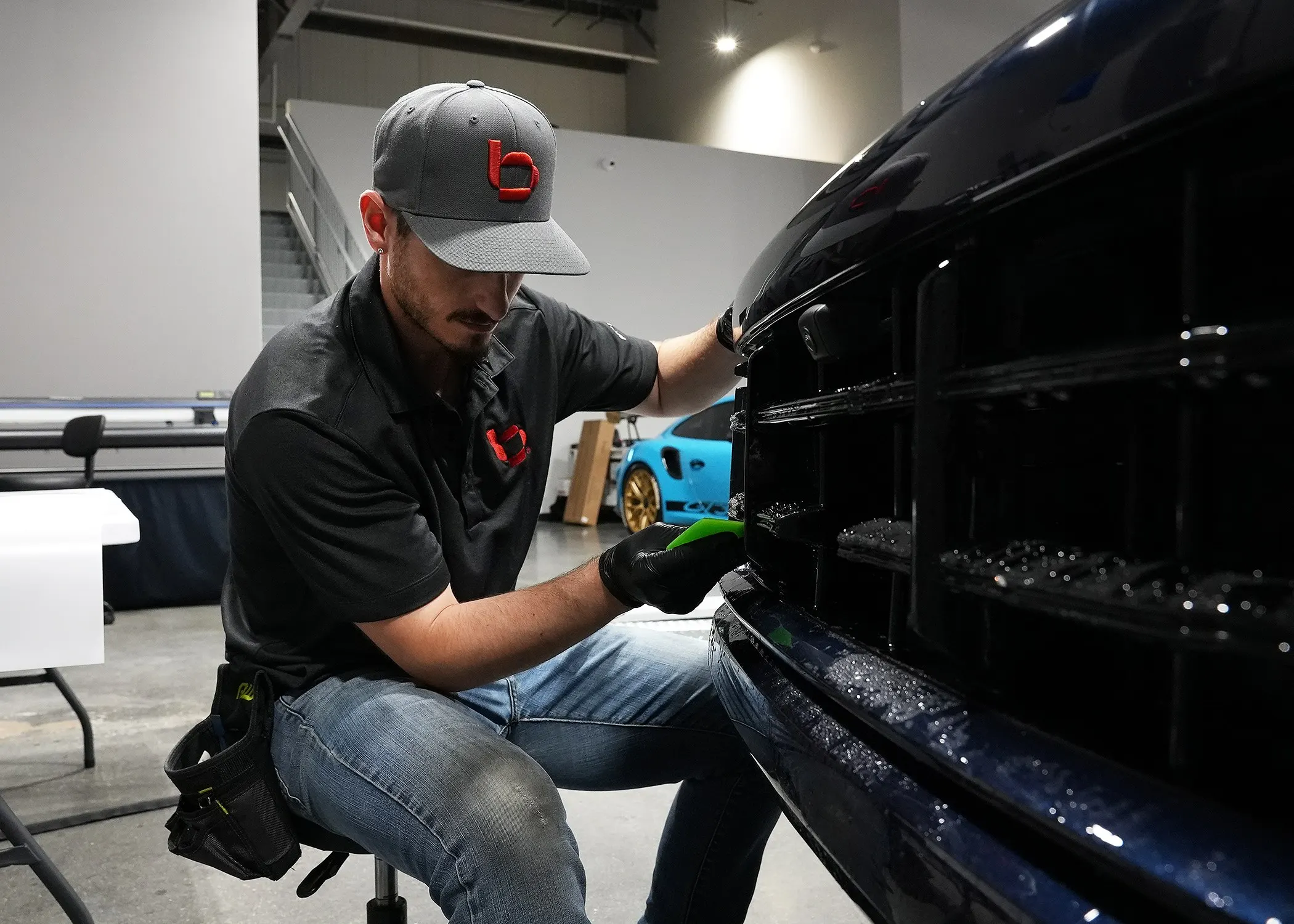
Paint protection film is a clear, self-healing urethane layer that absorbs the impact of stones before they reach the paint. We install LLumar film in house, and most drivers start with the bumper, hood, fenders and mirrors. Full Front Plus adds the rocker panels and A-pillars, and Full Body covers every painted panel. Matte film is available at both shops.
Ceramic coating for the rest
A Gyeon ceramic coating bonds to corrected paint and makes salt and road film rinse off much more easily. It resists chemical staining, adds gloss and goes on over film. It does not stop stones, which is why film and coating are often done together.
Wash habits that help
- Rinse salt off through the winter, and do not wait for a warm day
- Use a clean mitt and a gentle soap, and dry with a soft towel
- Skip automatic brush washes, which leave fine scratches in any finish
- Rinse bird droppings, sap and bug splatter off soon after you see them
- Keep a pressure washer nozzle well back from the edges of the film
How we work
Every job is done in house by our full-time staff in a climate-controlled bay. The film carries a manufacturer backed warranty. We look at the car first, tell you what the paint needs and quote the job on the car itself.
NJ road damage questions
Is salt worse than gravel for paint?
They damage paint in different ways. Gravel creates chips, and salt takes advantage of them. Protecting against chips takes away most of the salt's chances.
Do I need to protect the whole car?
Not usually. The front end takes the most damage, and the lower panels take salt. Many owners start with Full Front and add a ceramic coating over the rest of the paint.
Can I get film on a car that already has chips?
Yes. We repair or correct what we can, tell you what will still show and then apply film to stop new chips.
Should I wait until spring?
There is no need to. Film goes on in our climate-controlled bay at any time of year, and the sooner it goes on the less it has to cover.