How paint protection film saves on paint repairs
Paint protection film saves money by taking the damage before it reaches your paint. A chip in the film is a small, simple repair. A chip in paint can lead to a touch up that never quite matches, a respray of the panel or, if it sits long enough, rust. Film costs more up front than doing nothing, and for the panels it covers it usually costs less than the repair work it prevents.
This page lays out how paint damage actually gets fixed, where the expense comes from and why keeping the original paint intact is worth planning for.
What fixing paint involves
Paint repair is more work than most people expect. A chip that goes through the clear coat and the colour has to be cleaned, filled, sanded, painted and clear coated. A scratch that goes past the clear coat needs the same treatment over a larger area.
On a bumper or hood, the shop often has to repaint the whole panel to get an even finish, because new paint has to blend with paint that has aged in the sun. Modern colours, especially metallics, pearls and tri-coats, are hard to match perfectly. Even good shops can leave a panel that looks slightly different in direct light.
Why chips lead to bigger repairs
A chip does not stay cosmetic for long. Once the clear coat is broken, water and road salt reach the layers underneath. On steel panels that can start rust, and on aluminum panels it can start corrosion. A small dot becomes a bubble, and the bubble becomes a patch that needs real bodywork.
New Jersey winters speed this up. Brine from the road sits in every chip and works on it for weeks. This is the damage that costs the most to put right, and it is the damage film is best at stopping.
What film takes off the list
LLumar paint protection film is a clear urethane layer that sits over the paint. It absorbs the hits that would otherwise land on the clear coat.
- Rock chips on the bumper, hood, fenders and mirrors
- Light scratches from washing, keys, bags and car covers
- Bug splatter and bird droppings that etch bare clear coat
- Scuffs from door edges and parking lot contact on the panels you cover
The film is self-healing. Light swirls in the top layer close up with warmth from the sun or the engine, so a car that sees daily use keeps looking sharp.
The value of original paint
A repainted panel is something a buyer or an appraiser looks for. Paint meters, uneven texture and slight colour differences all show up on a careful inspection. Original paint in good condition is one of the first things people check on a newer or enthusiast car.
Film keeps the factory finish intact. When you sell the car, or the lease ends, the film can come off and the paint underneath is the paint the car left the factory with. Repaired paint cannot offer that.
Where film earns its keep fastest
Some situations make the case more clearly than others.
- A new or nearly new car, when there is nothing to fix first
- Cars with expensive paint, special colours or finishes that are hard to match
- Long highway commutes, where the front end takes hits every week
- Trucks and SUVs with large, upright front ends
- Cars you plan to keep, where chips would build up over the years
Choosing coverage that fits the risk
You do not have to cover the whole car. Most damage lands on the front, so many owners start there.
- Basic Front covers the front bumper, full hood, mirrors, headlights and fog lights, and it is usually done within a day
- Full Front adds the full front fenders, and takes one to two days
- Full Front Plus adds the A-pillars, the roof edge over the windshield and the rocker panels, in one to two days
- Full Body covers every painted panel, and takes two to three days
Matte film is available at both shops if you want a satin look or have factory matte paint. We quote each job on the car itself, so send us the year, make and model and the coverage you have in mind.
How we install it
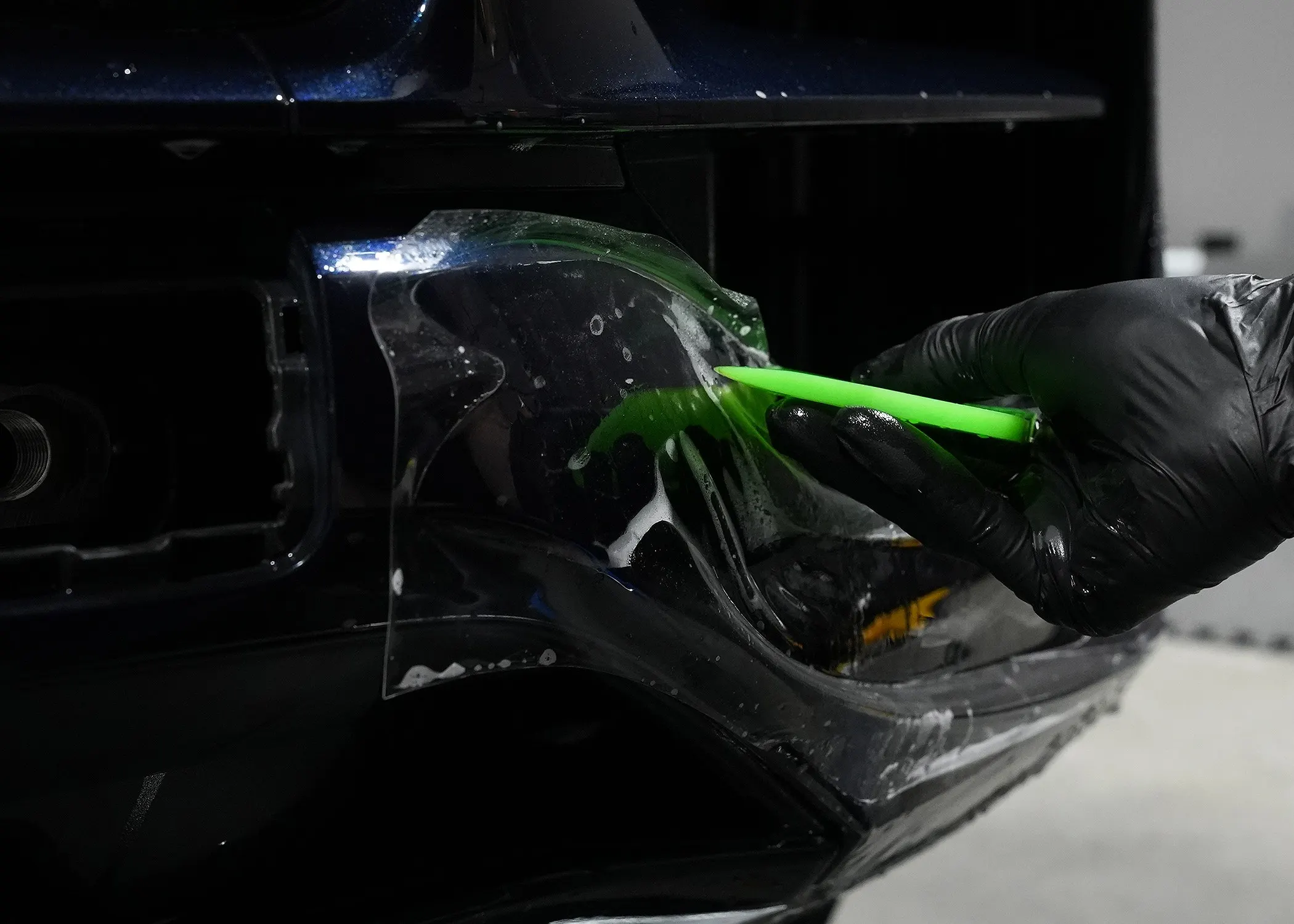
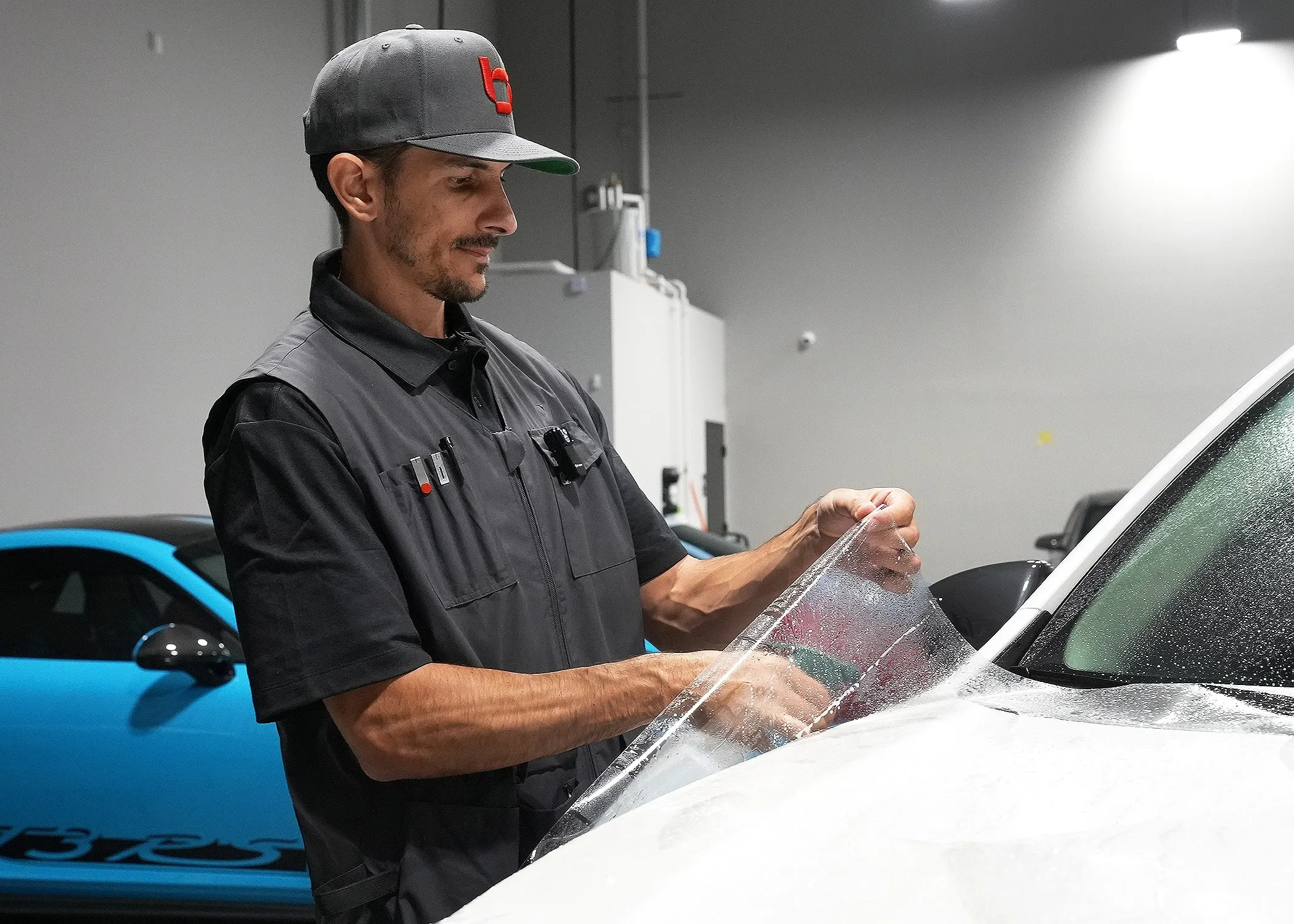
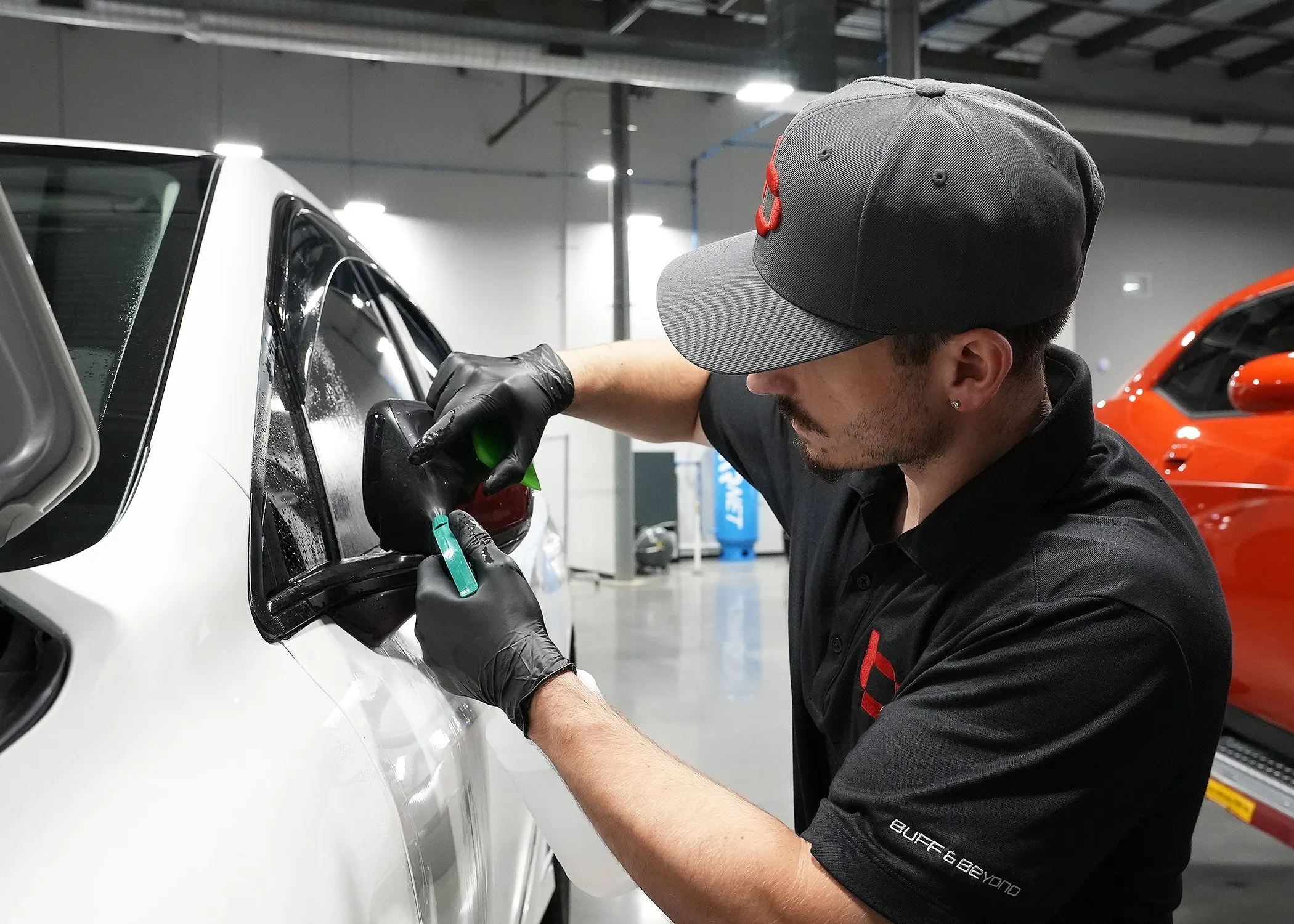
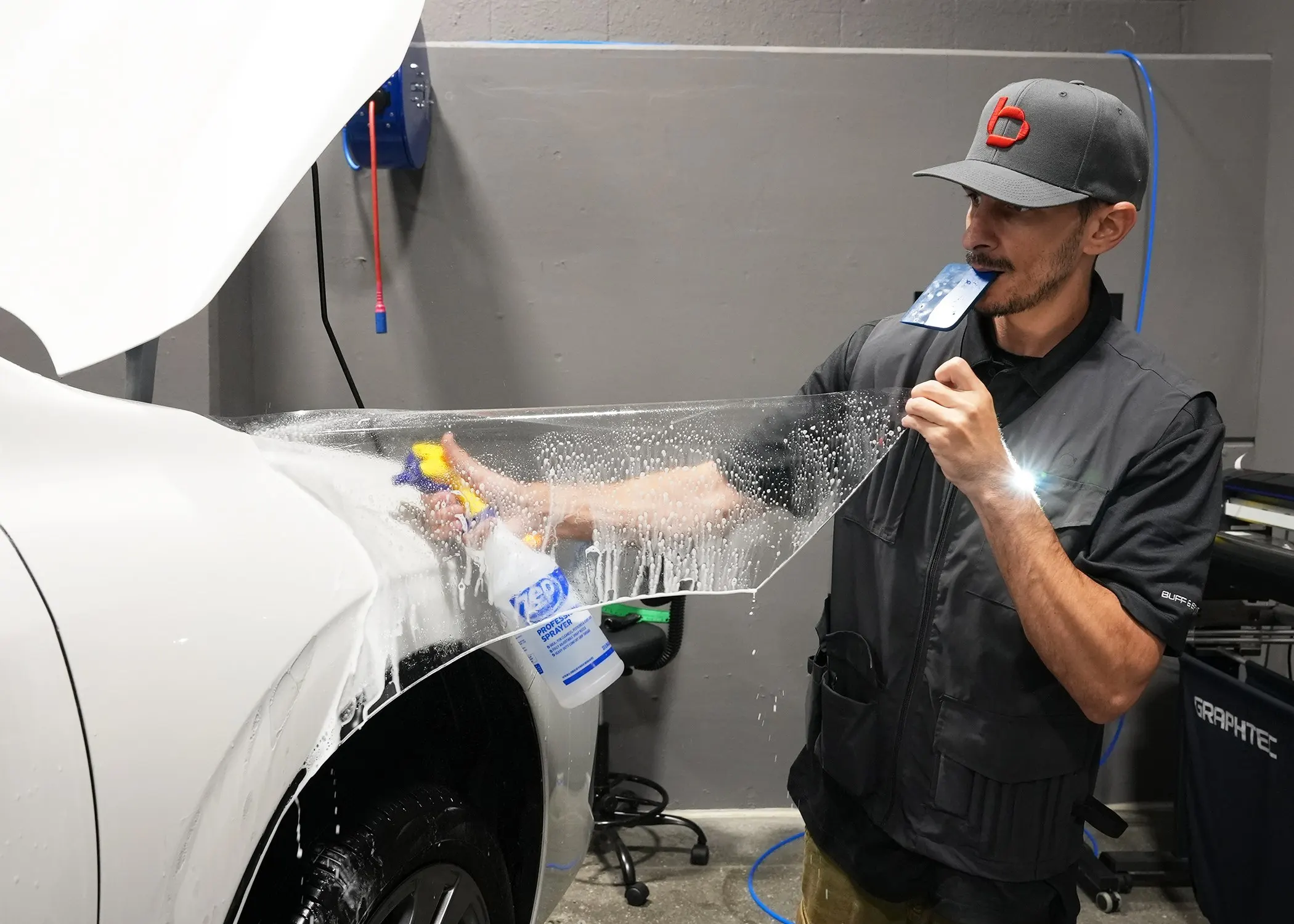
The car is washed, decontaminated and inspected under good light. If the paint has swirls or scratches, we talk about correction first, because film keeps whatever is underneath it. Patterns are adjusted to your car before cutting, and the film is laid panel by panel in a climate-controlled bay, with edges wrapped wherever the panel allows.
The work is done in house by our full-time staff, and the film carries a manufacturer backed warranty.
Paint protection film and repair questions
Is paint protection film cheaper than a repaint?
For the panels it covers, film generally costs less than repainting them, and it keeps stopping new damage after the first hit. A repaint fixes one problem once.
Does film protect against deep scratches?
Film is made to take stone chips, light scratches and everyday abrasion. A hard impact or a deep gouge can cut through film. When that happens it is the film that needs repair or replacement, and the paint beneath is often untouched.
Can I add film after chips have started?
Yes, and sooner is better. Film locks in what is underneath it, so chips should be repaired and the paint corrected first where needed. We look at the car and tell you what makes sense.
Is film worth it on a leased car?
Many lease owners choose it. Covering the front end keeps the chips and scratches that show up at turn in off the paint, and the film comes off cleanly when the lease ends.