Is paint protection film worth it?
For most cars that see real New Jersey miles, yes. Paint protection film is the only product that physically stops rock chips, and chips are the damage that costs the most to put right. Whether it is worth it for your car comes down to how you drive, how long you plan to keep it, and how much of the car you cover.
This page walks through what the film does, what sets the price of a job, and how to pick a package that matches the way you use the car.
What paint protection film does
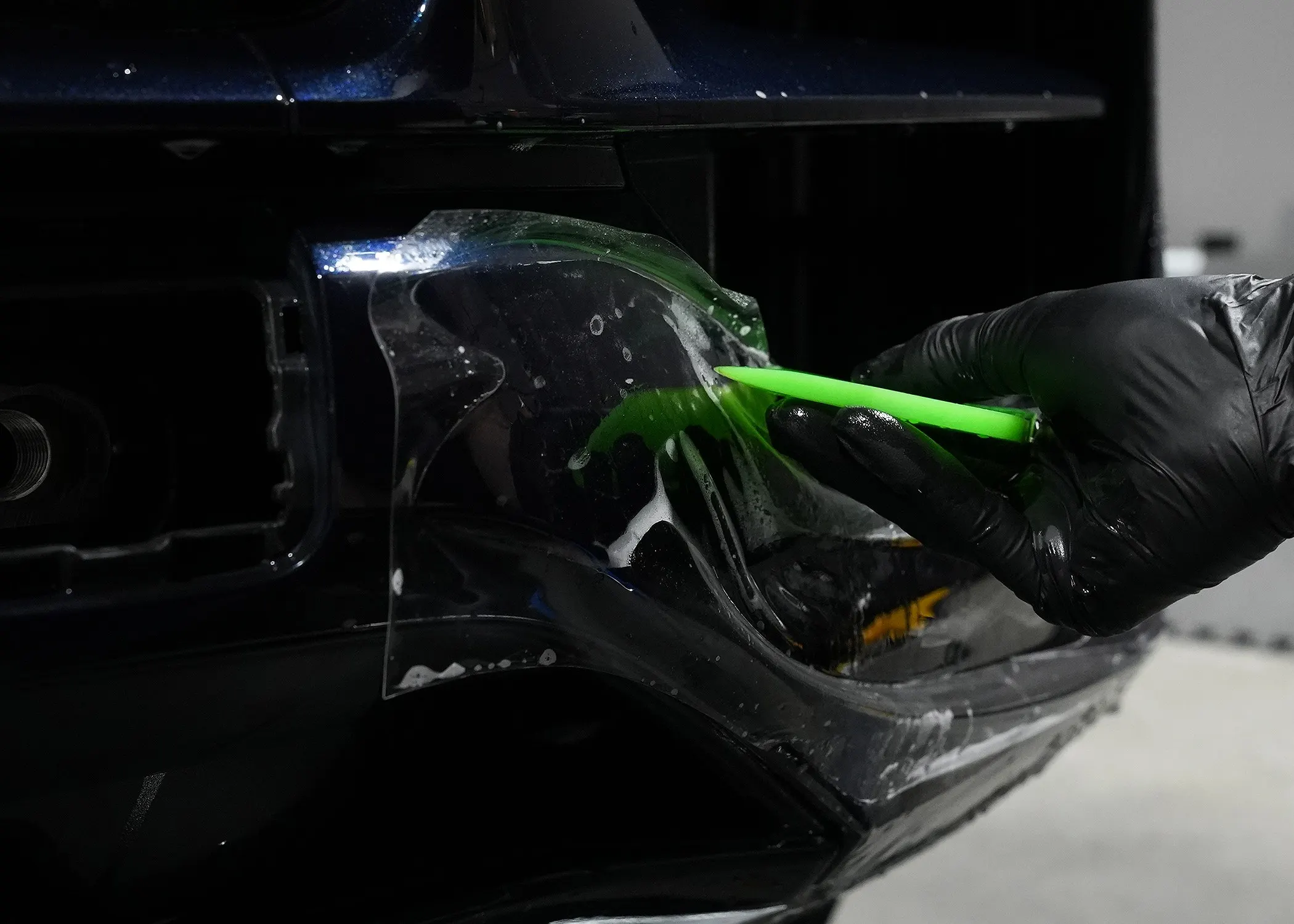
Paint protection film, also called clear bra or PPF, is a clear urethane film laid over the painted panels. It sits between the paint and the road. A stone thrown up by the truck in front hits the film and the paint underneath never knows it happened.
The LLumar film we install is self-healing. Light swirls and scuffs in the top layer close up with warmth from the sun or the engine. It also resists yellowing, and its surface sheds water and grime, so the car is easier to wash.
Film protects against:
- Rock chips and sand blasting on the highway
- Road salt and brine through the winter
- Bug splatter and bird droppings that etch bare clear coat
- Light scratches from washing, keys, bags and car covers
Why rock chips are the real cost
Swirls can be polished out. A chip cannot. Once a stone goes through the clear coat and the colour, the only real fixes are a touch up that never quite disappears or a respray of the panel.
A respray brings its own problems. Matching factory paint is hard, and a repainted bumper or hood is something a buyer or an appraiser will look for. Keeping the original paint intact is a big part of why owners of newer and enthusiast cars put film on in the first place.
What affects the cost of paint protection film
Every job is quoted on the car itself, because two cars that look similar on paper can take very different amounts of time. These are the things that move the number.
- Coverage. A front end package covers a few panels. Full Body covers every painted panel on the car.
- The car. Size, the shape of the bumper and the number of vents, sensors and creases all change how long the install takes.
- Edges. Wrapping edges around the panel, so no line of film shows, takes more time than trimming them short.
- Paint condition. Film locks in whatever is underneath it, so paint with swirls or scratches should be corrected before the film goes on.
Send us the year, make and model and the coverage you are thinking about, and we will give you a straight number for that car.
Which paint protection film package to choose
Most damage happens at the front of the car, so that is where most owners start.
Basic Front
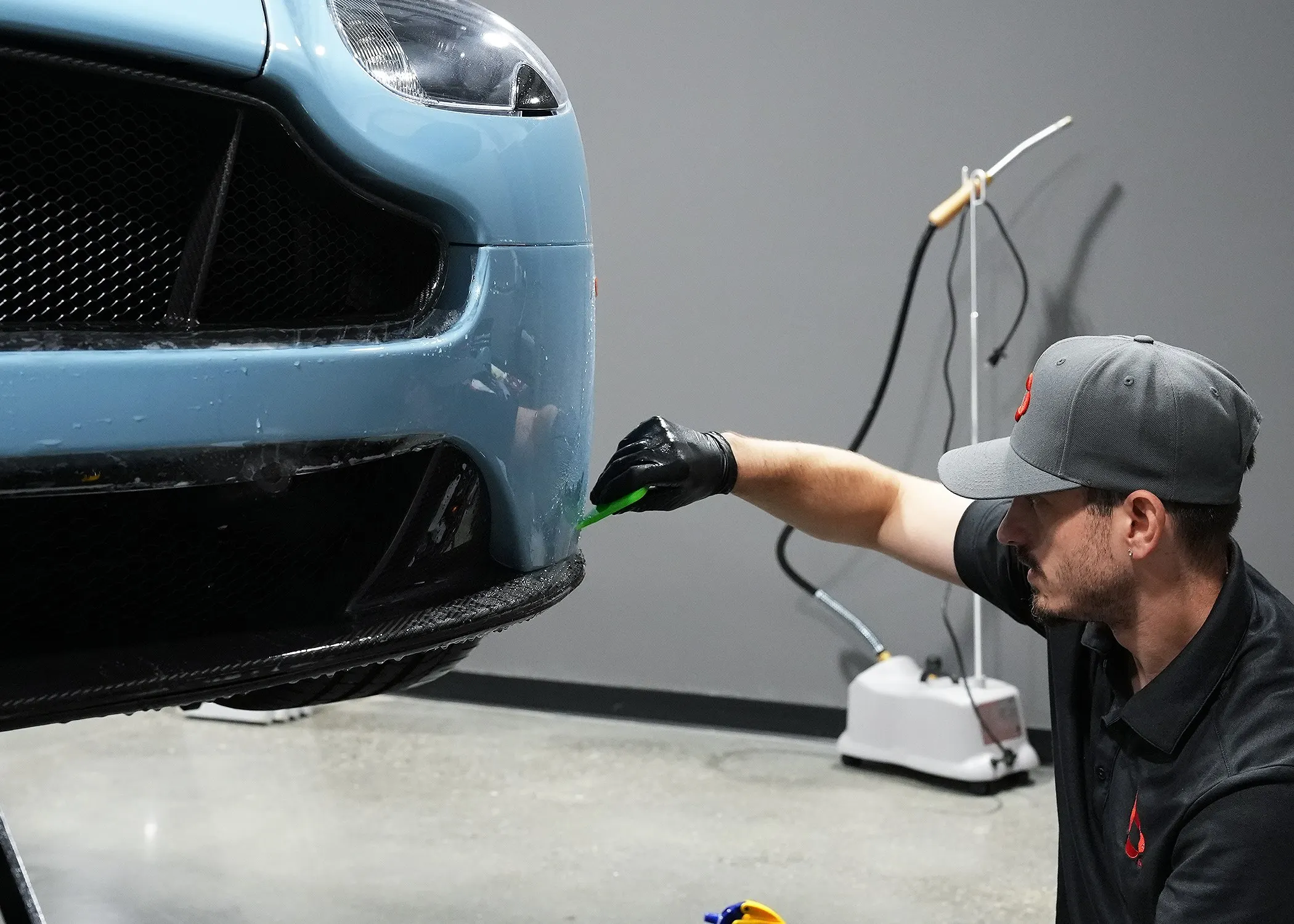
Front bumper, full hood, mirrors, headlights and fog lights. It covers the surfaces that take the most hits, and it is usually done within a day.
Full Front
Everything in Basic Front plus the full front fenders. This is the package we recommend most often, because it protects the whole face of the car with no film line across the fenders.
Full Front Plus
Full Front with the A-pillars, the roof edge over the windshield and the rocker panels added. Rockers take a beating from what the front tires throw back, so this is a good fit for cars that see a lot of highway or the occasional track day.
Full Body
Every painted panel. It is the right call for cars you plan to keep for a long time, for collector and exotic cars, and for owners who want parking lot scuffs and door dings on the sides covered too.
When paint protection film is worth it, and when it may not be
Film earns its keep on a new or nearly new car, a car you plan to keep, anything with paint that is expensive or hard to match, and any car that spends time on the Turnpike, the Parkway or Route 1. The sooner it goes on, the less damage it has to sit over.
If the car already has a lot of chips on the front, film will not hide them, and the paint may need work first. If you want gloss and easier washing more than impact protection, a ceramic coating may suit you better. Many owners do both, with film on the front and a coating over the whole car, which is what The Beyond Package is built around.
How a paint protection film install goes at Buff & Beyond
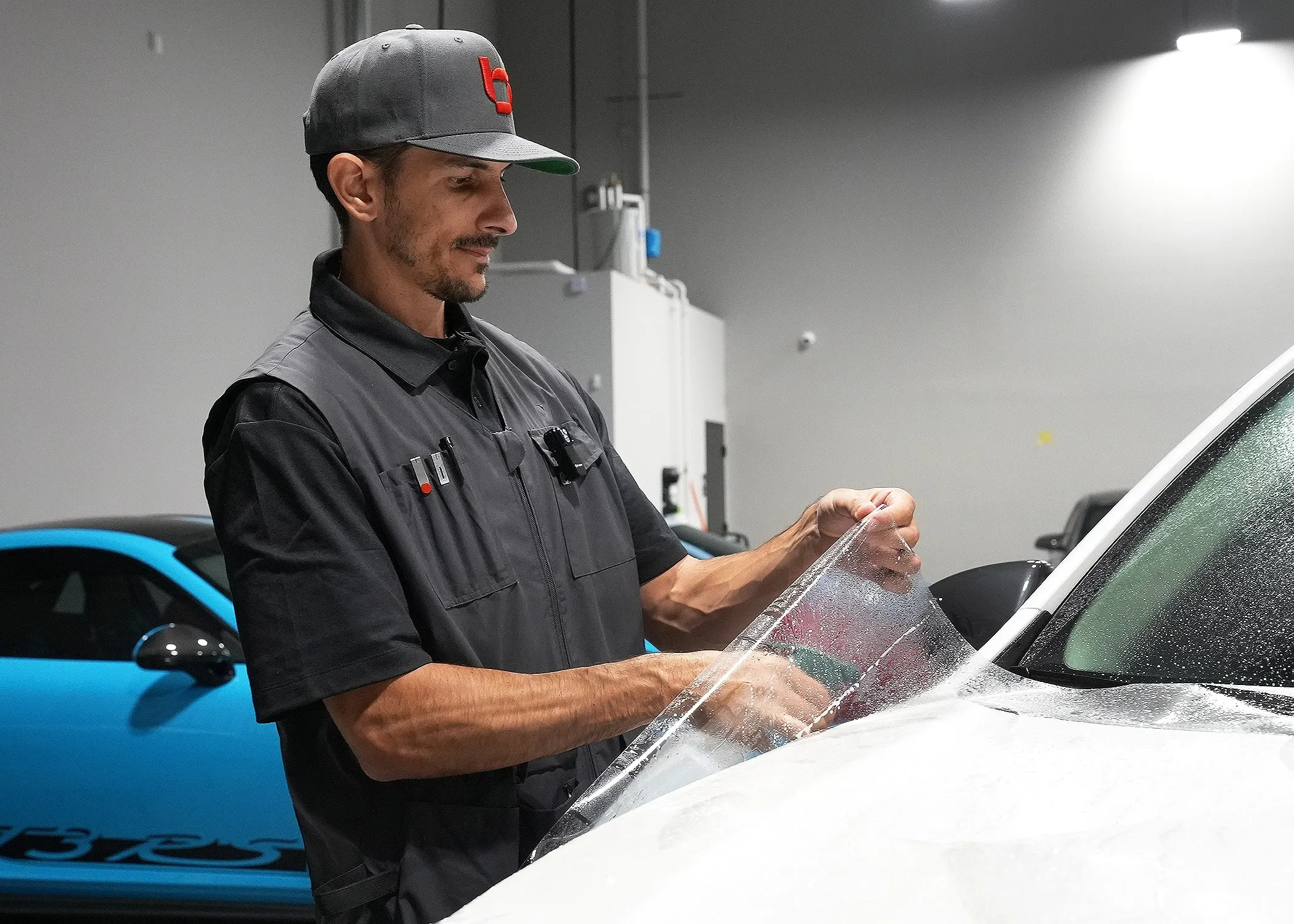
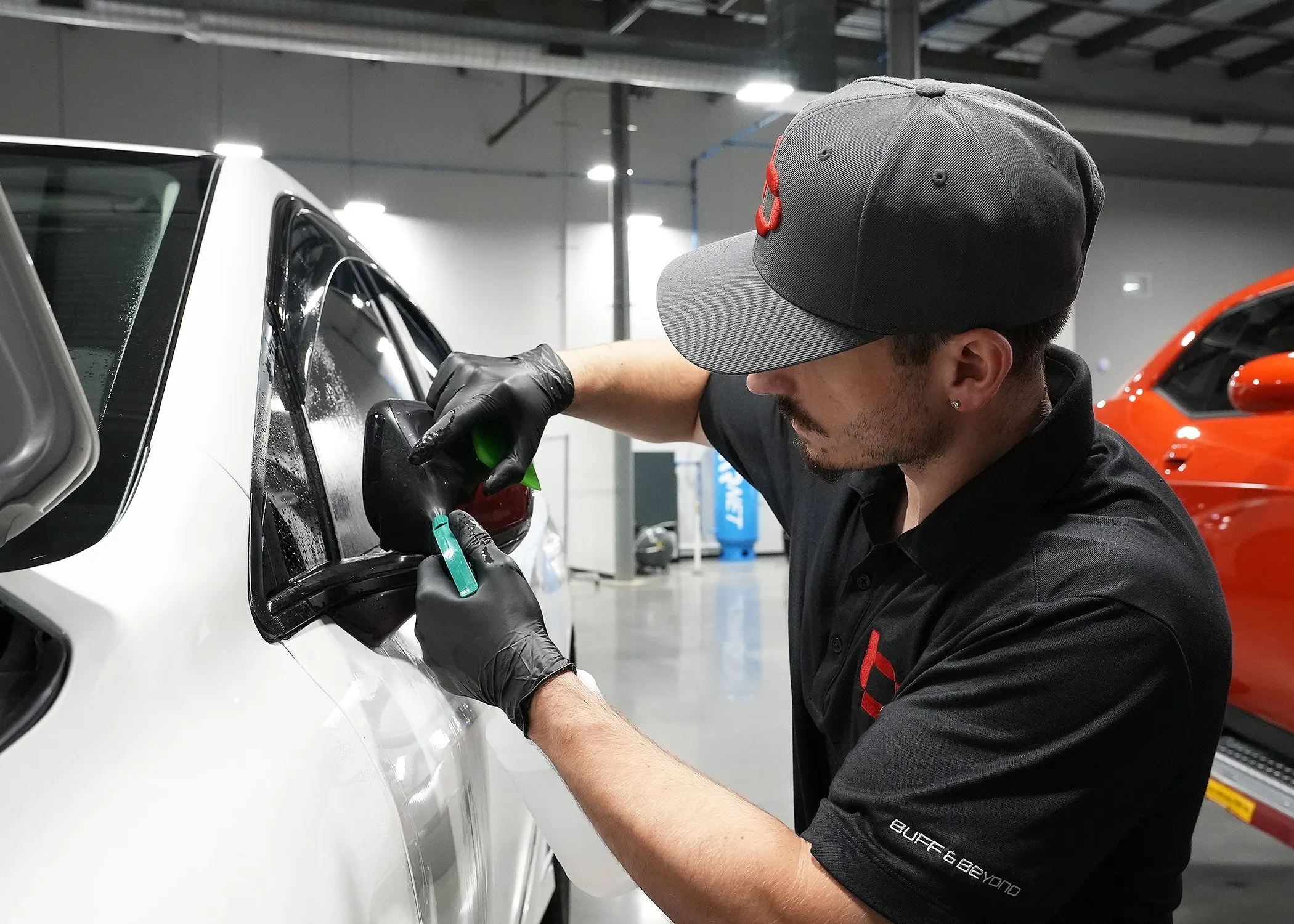
The car is washed and decontaminated, and the paint is inspected under good light. Any correction is done before the film goes on. Patterns for your car are adjusted before they are cut, then the film is laid panel by panel in a climate-controlled bay, with edges wrapped wherever the panel allows.
Every install is done in house by our full-time staff, at our shops in Millstone and Ocean Township. The film comes with a manufacturer backed warranty, and we go over care with you when you pick the car up.
Paint protection film questions
How long does paint protection film last?
Quality film lasts for years with normal care, and it carries a manufacturer backed warranty. How long it looks its best depends on how the car is stored, driven and washed.
Can you see the film on the car?
From normal viewing distance, no. The gloss film is optically clear, and with wrapped edges there is very little to find even up close. Matte film is available if you want a satin finish instead.
Can paint protection film be removed?
Yes. Film that is removed properly comes off without harming factory paint, which is part of what makes it a good way to keep the original finish.
Is paint protection film better than ceramic coating?
They do different jobs. Film stops impacts. A coating adds gloss, makes the car easier to clean and protects against chemical etching, and it can go on over the film. Our comparison of film, coating and tint goes into more detail.