What is ceramic window tint?
Ceramic window tint is a window film made with tiny ceramic particles that reject heat and ultraviolet light. The particles are too small to see, contain no metal and do not fade, so the film cools the cabin and protects the interior without needing to be dark. It is the film we install at Buff & Beyond, in LLumar.
How ceramic window tint is made
A window film is a stack of thin layers. There is an adhesive layer that bonds to the glass, a layer that carries the tint, a protective layer on the outside, and a liner that comes off during the install. What makes a film ceramic is the middle layer.
In ceramic film, microscopic ceramic particles are built into that layer. They absorb and scatter infrared light and filter ultraviolet light, so the film stops heat before it reaches the cabin. The surface of the film has a scratch resistant coating designed to handle rolling windows up and down.
How ceramic film differs from dyed film
Dyed film is the basic option. Dye gives the film its dark look, and dye breaks down in the sun. Over time dyed film fades, bubbles and turns purple, and it does little to keep heat out.
Ceramic film does its work with particles in the film. There is nothing to bleach out, so it holds its color and keeps doing its job.
The difference is easy to miss on day one, since a fresh dyed film and a fresh ceramic film can look the same on the glass. It shows up after a couple of summers in the sun, when one is still clear and the other has changed color.
How it differs from metallic and carbon film
Metallic film adds fine metal to the film to reject heat. It works, but metal conducts, and it can weaken phone, GPS and radio signals.
Carbon film uses carbon particles. It resists fading and does not interfere with signals, and it gives a flat, slightly matte look. Ceramic film generally rejects more infrared than carbon at the same darkness and looks clearer. If you want a full comparison, our page on why ceramic window tint is the best choice walks through all four.
What ceramic tint does for the car
- It cuts the infrared heat that comes through the glass, so the cabin is cooler and the air conditioning works less.
- It filters ultraviolet light, which slows fading and cracking of the dashboard, seats and trim.
- It reduces glare from low sun and headlights.
- It adds privacy, with the amount set by the shade you choose.
- It holds glass together if a window breaks.
- It leaves phone, GPS and radio signals alone, because it has no metal in it.
Our guide on how window tint makes your car more comfortable covers these benefits in more detail.
Shades and what they look like
Because the heat rejection comes from the particles, you do not have to go dark to get a cooler car. A shade can be chosen for appearance and visibility. We install five shades, 70, 50, 35, 20 and 5 percent. The number is the share of light the film lets through, so a higher number is lighter.
Seventy is a light, clean look that is easy to see through at night. Five is a full privacy shade. The ones in between are where most owners land. Our guide to choosing a window tint shade goes through each.
Where ceramic tint goes on the car
Ceramic film can go on any piece of glass on the car. We tint in sections.
- Window Strip, across the top of the windshield.
- Front Two Windows, the driver and passenger sides.
- Full Windshield.
- All Sides and Rear Window.
You can start with the front two windows and the windshield for the heat and glare, then add the rest, or do the whole car at once. We will go through the options for your car when you send the form.
How we install it
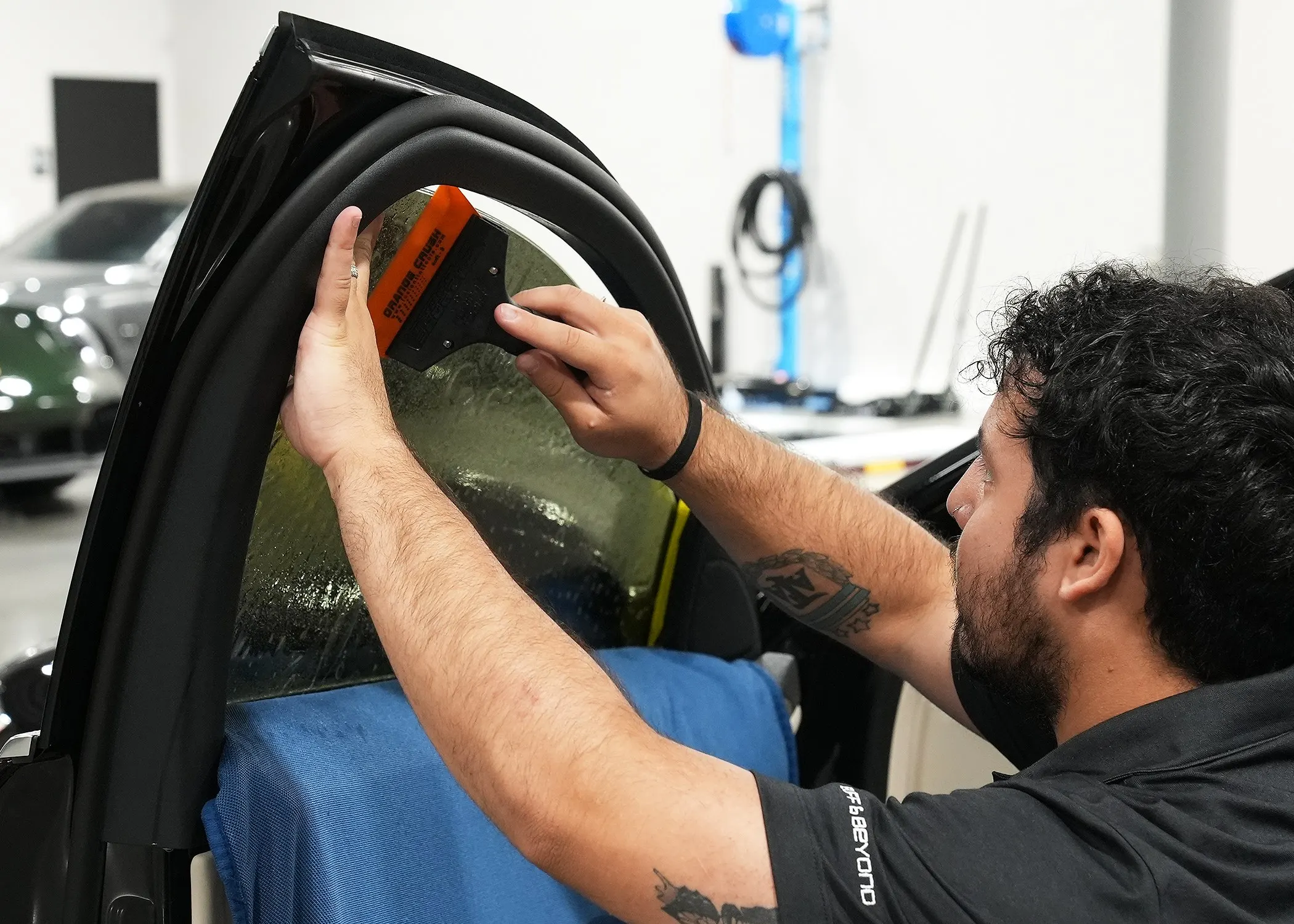
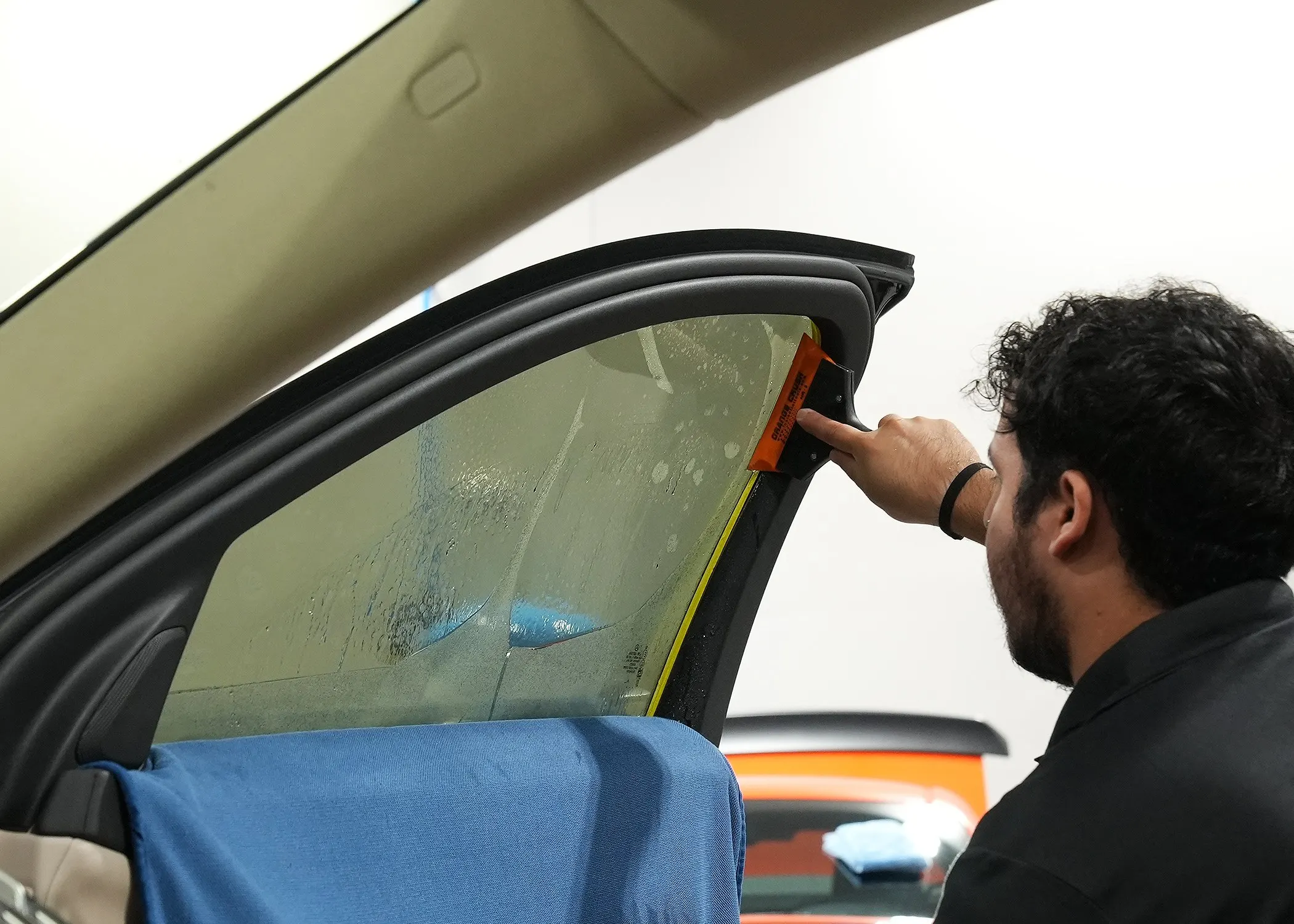
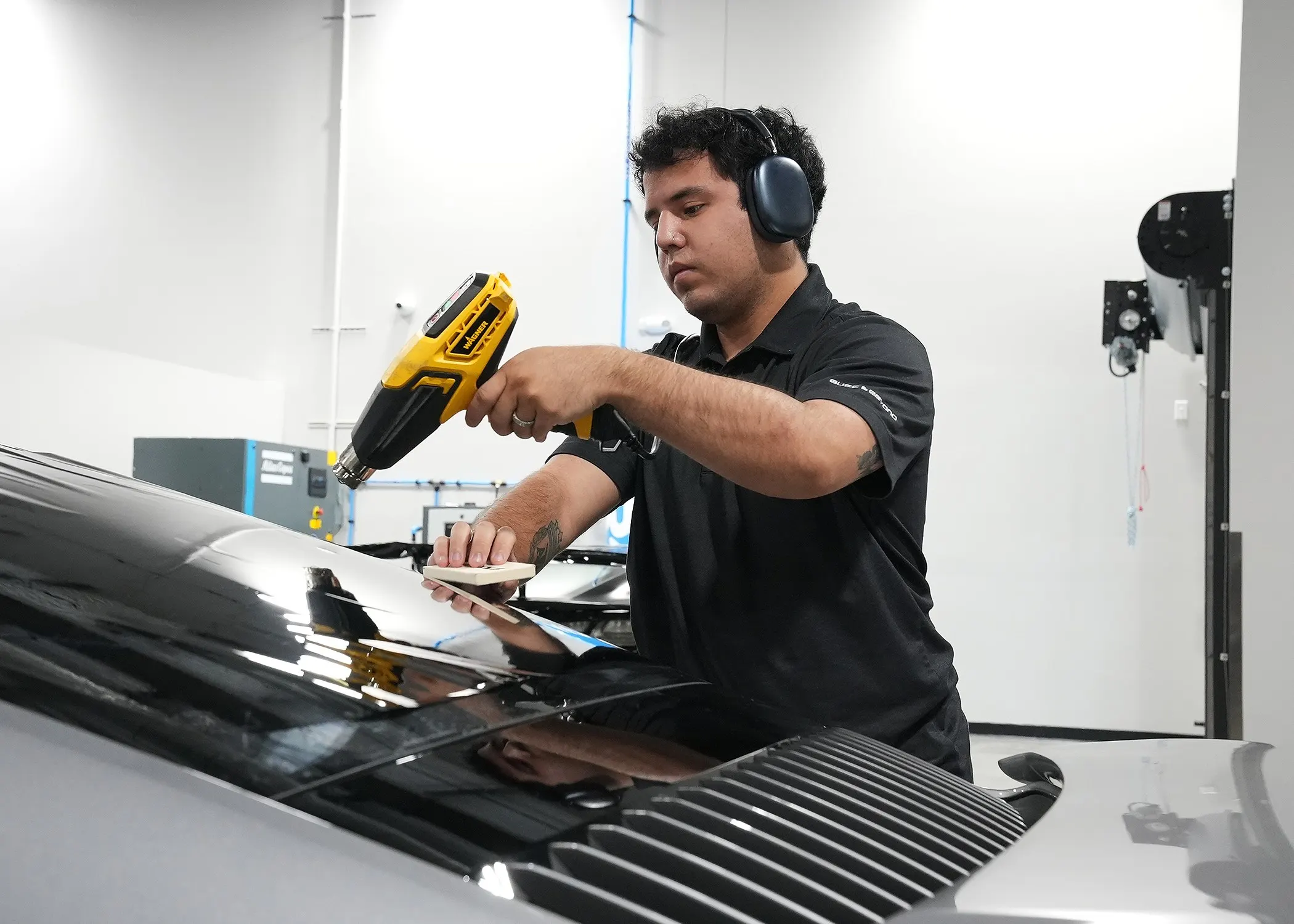
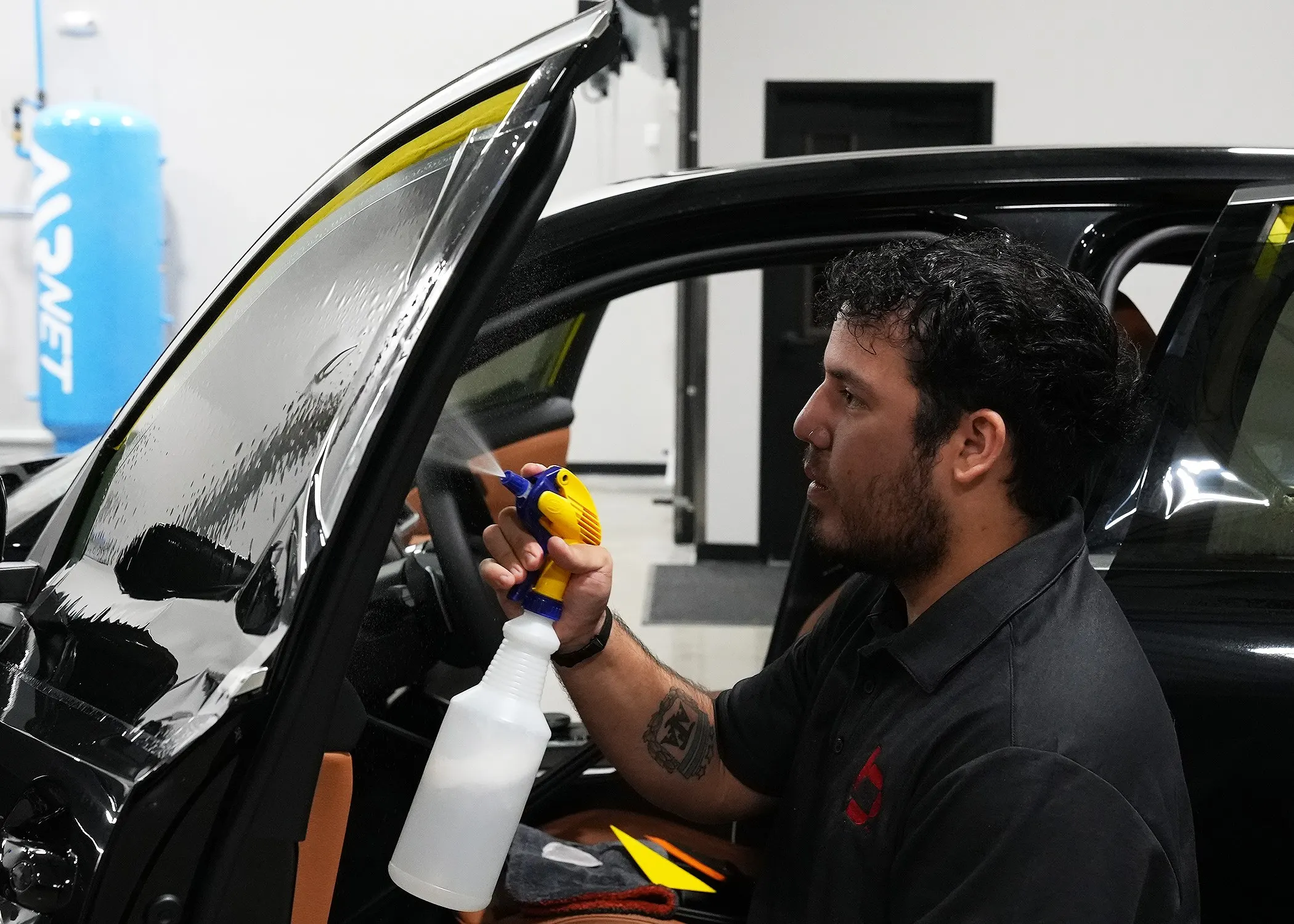
Install quality matters as much as the film. The glass is cleaned and prepared, the film is cut to fit each window, and it is applied and squeegeed down in one of our climate-controlled bays, where dust has little chance of getting under the film. Our full-time staff does every job in house at both shops.
The film needs a few days to cure against the glass. A slight haze at the start is moisture working its way out, and it clears on its own.
Ceramic window tint questions
Is ceramic tint the same as ceramic coating?
No. They are different products that happen to share a word. Ceramic tint is a film on the glass that rejects heat and UV light. A ceramic coating is a liquid layer on the paint that adds gloss and makes the car easier to clean. Many owners get both, and our comparison of film, coating and tint explains where each fits.
Does ceramic tint block phone and GPS signals?
No. The film is non-metallic, so phones, navigation, toll readers and radio work as normal.
Is ceramic tint darker than regular tint?
It can be any shade. The shade you choose sets how dark the glass looks. The ceramic particles do the work on heat, so a lighter ceramic film often feels cooler than a darker dyed one.
How long does ceramic tint last?
It is made to stay clear, flat and the same color for years. How long it looks its best depends on the install, the care it gets and how much sun the car sees.