Why choose ceramic window tint
Ceramic is the best window tint for most vehicles because it rejects more heat than dyed or carbon film, it does not fade, and it does not interfere with signals. Dyed film is the cheapest and the first to fail. Metallic and carbon film each fix part of the problem. Ceramic fixes all of it.
Here is how the four types compare on the things that matter once the film is on the car.
Dyed window tint
Dyed film is the entry level choice. A layer of dye darkens the glass, which gives privacy and takes some glare away. It does very little against heat, because dye absorbs light without rejecting the infrared that heats the cabin.
Dye is also the weak point. Sun breaks it down, and dyed film fades from black to purple or brown, then bubbles and peels. Owners who start with dyed film often end up paying to remove it and tint again, which is the story behind most of the replacements we do. Our page on signs it is time to replace window tint covers what that looks like.
Metallic window tint
Metallic film has fine metal particles that reflect heat. It rejects heat better than dyed film and it does not fade the way dye does, so on paper it is a reasonable step up.
The metal is the catch. It conducts, so it can weaken phone, GPS, toll reader and radio signals. It can also give the glass a shiny, mirrored look that some owners do not like.
Carbon window tint
Carbon film uses carbon particles, with no dye or metal in the film. It does not fade like dyed film and it does not interfere with signals. It has a flat, slightly matte look that many people like, and it is a solid choice for a car that needs privacy and some heat control.
Its limit is performance. At the same darkness, carbon generally lets more infrared through than ceramic and can look a little less clear.
Ceramic window tint
Ceramic film is built with ceramic particles. They are nonconductive, so signals pass through, and they do not fade, so the color stays put. They reject infrared well, which is the heat people feel, and they do it at any shade. A light ceramic film can feel cooler inside than a darker dyed one. The film also stays clear to look through, including at night.
Our page on what ceramic window tint is explains how the layers are put together.
Side by side
- Heat. Dyed film is weakest, metallic and carbon are moderate, and ceramic is strongest.
- Fading. Dyed film fades and turns purple. Metallic, carbon and ceramic hold their color.
- Signals. Metallic film can interfere. Dyed, carbon and ceramic do not.
- Clarity. Ceramic is the clearest, with carbon close behind.
- Lifespan. Dyed film fails first. Ceramic is made to last for years.
Why we install ceramic
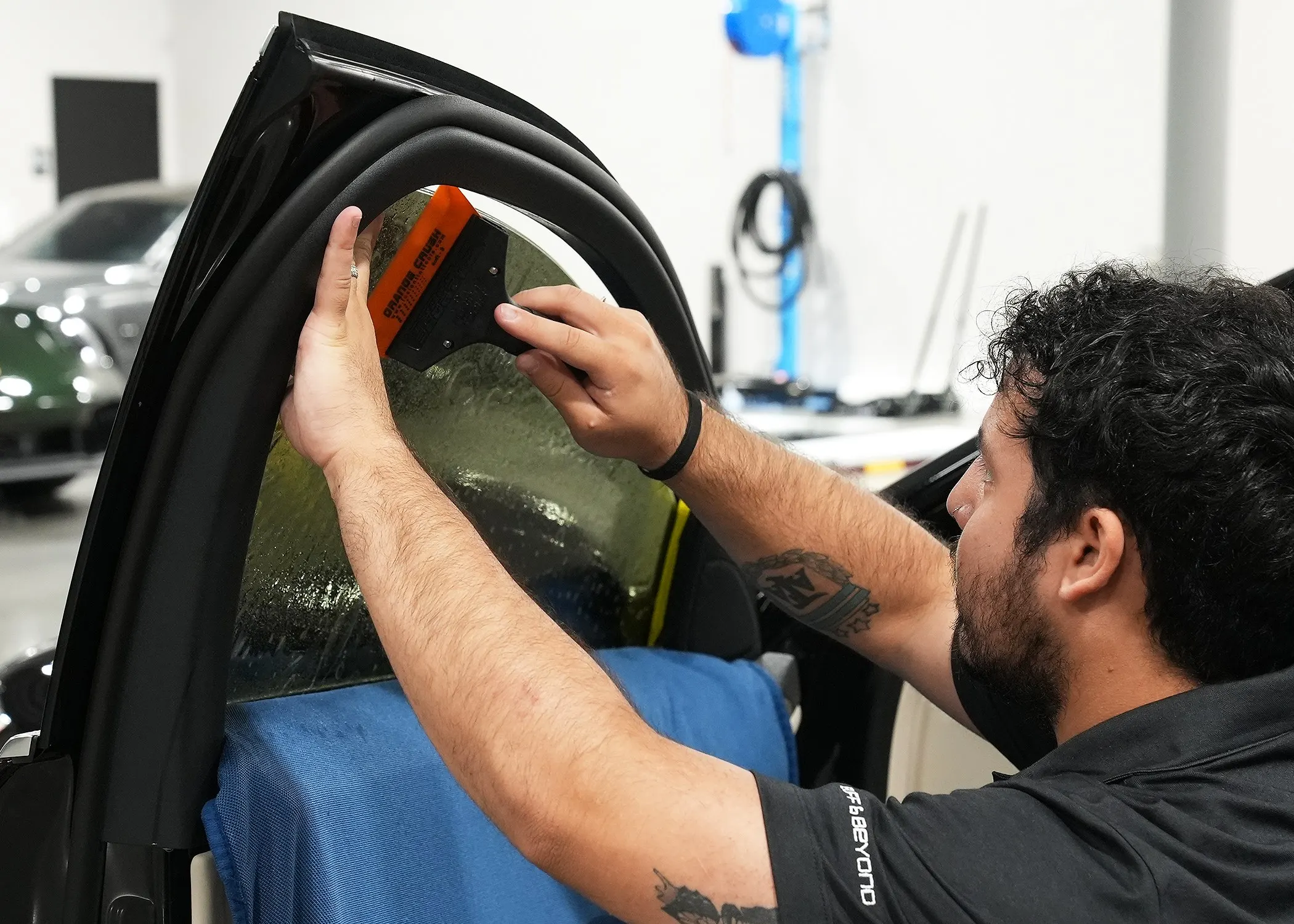
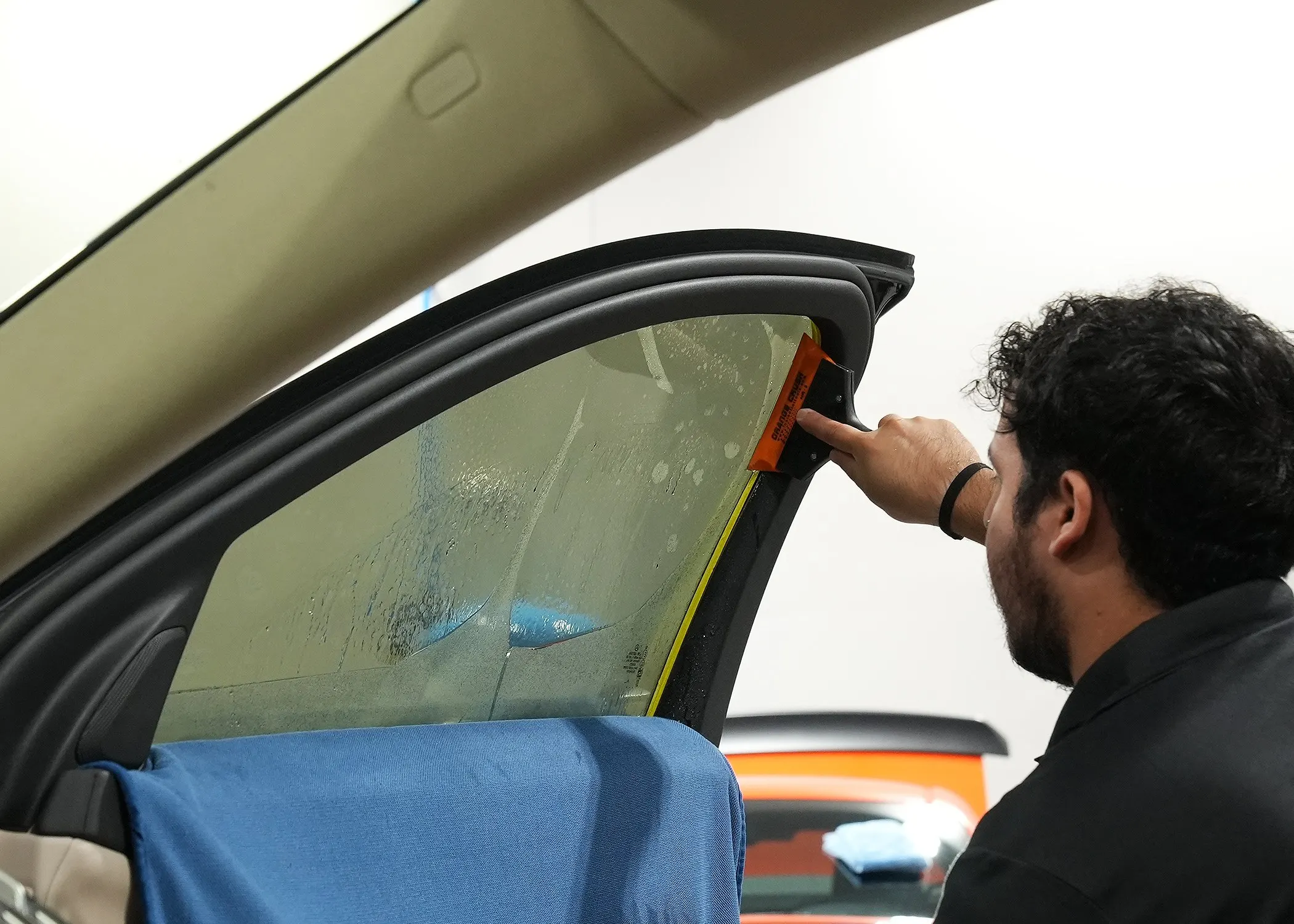
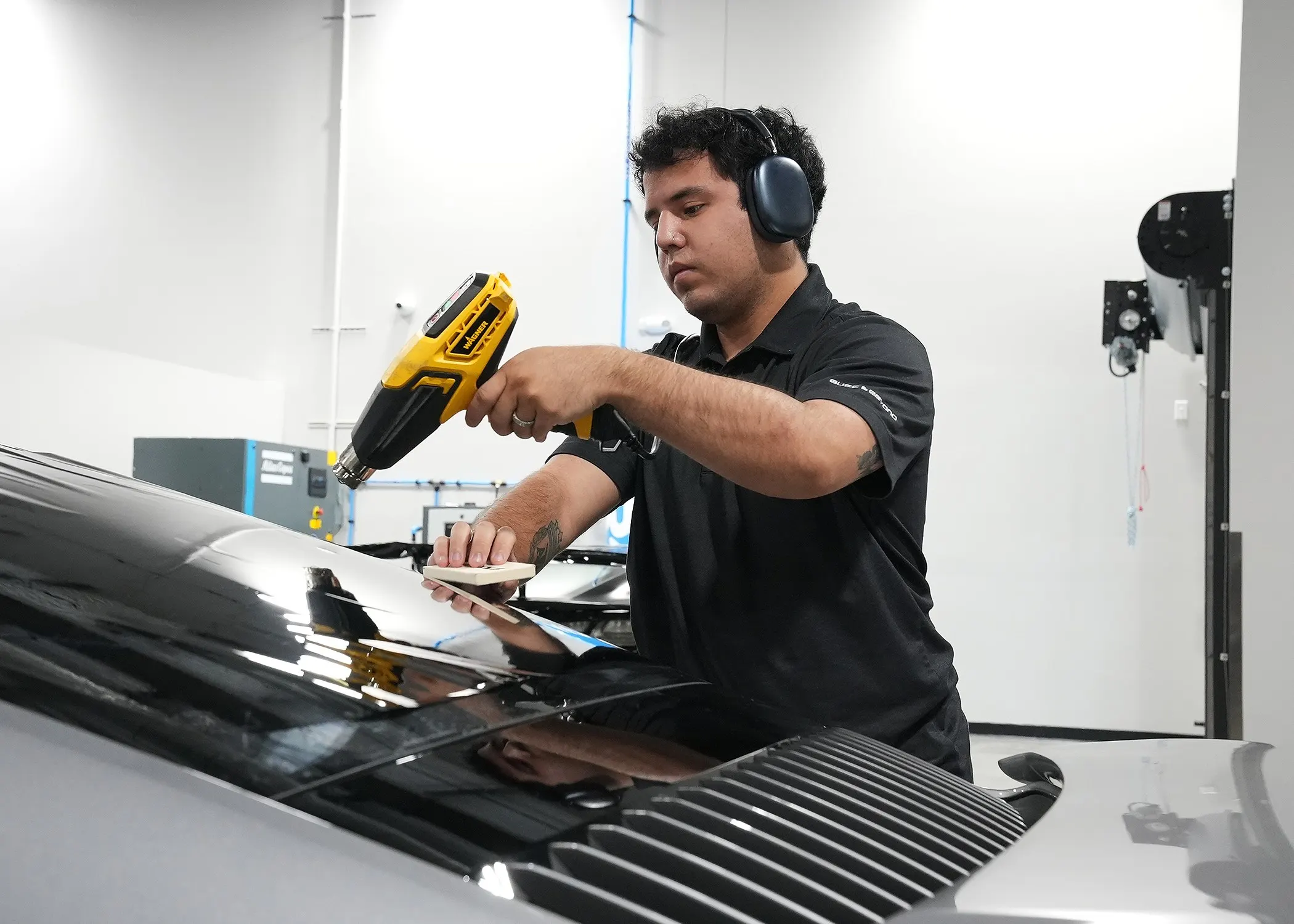
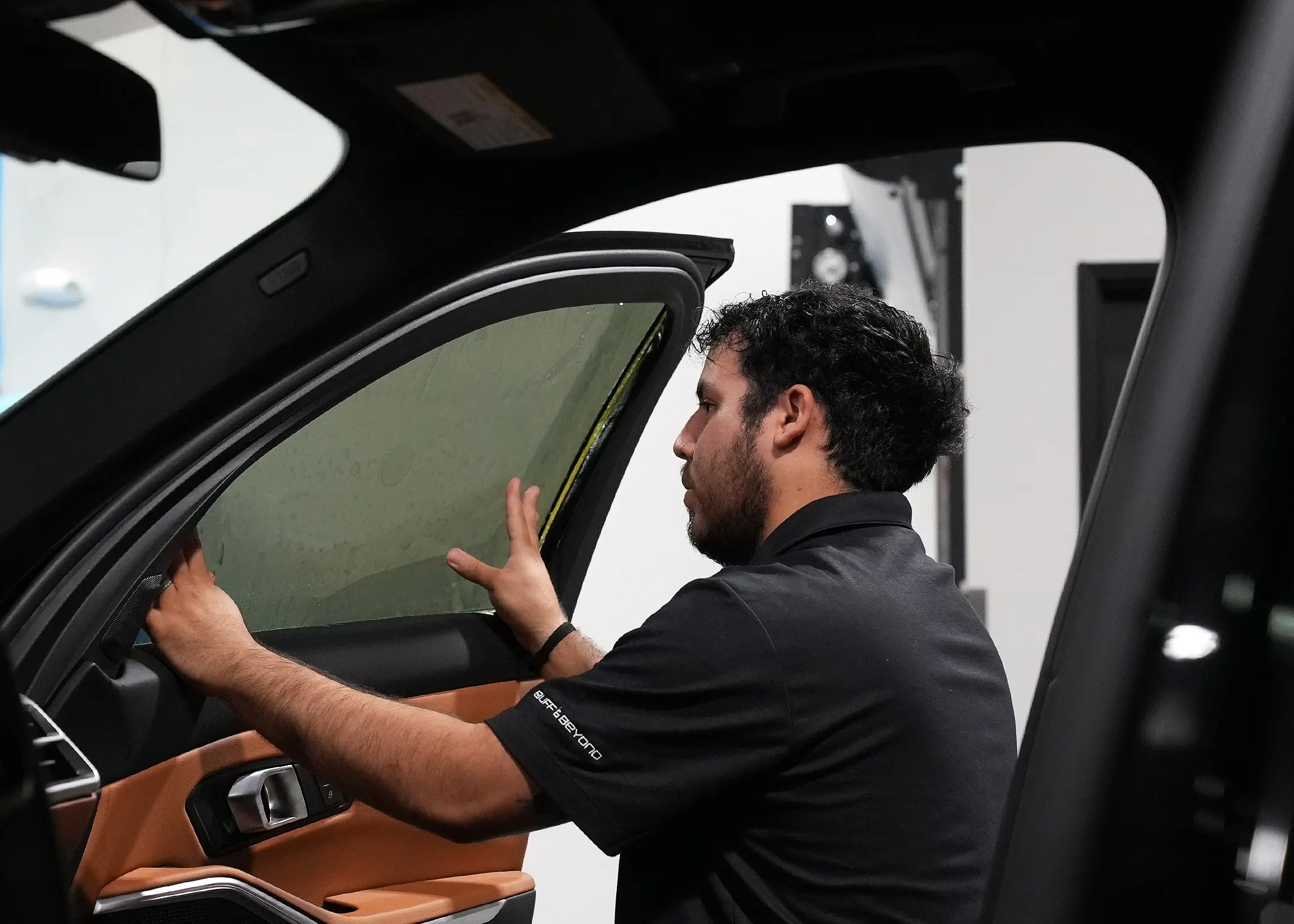
Window tint is on the car every day, so we use the film that holds up. LLumar ceramic film is what we install at both shops. It covers the heat, glare and interior protection people come in for, and it does not turn into a replacement job a few summers later.
The install matters as much as the film. Our full-time staff does every job in house, in climate-controlled bays, so dust stays out of the film and the edges sit tight. We install 70, 50, 35, 20 and 5 percent shades and can show you samples on your car.
What to ask any tint shop about the film
Before you book tint anywhere, ask three things. Ask what type of film it is, whether dyed, carbon or ceramic, and which brand. Ask who installs it and where, because dust in an open garage ends up under the film. Ask what warranty comes with the film and what it covers.
A shop that answers those clearly is telling you what you are buying. The film type tells you how it will behave in the sun, and the install tells you how it will look next summer. When two quotes are far apart, the difference is almost always in those answers.
How the types age on the same car
Picture the same car, tinted with each film and parked outside through a few hot seasons. The dyed windows start to go purple on the sun side first. The metallic windows keep their color and may start to give you trouble with the toll reader or the phone mount. The carbon windows look fine and keep the cabin comfortable.
The ceramic windows look the way they did on day one, and the cabin still feels the difference when you get in. That slow separation is the real case for ceramic, and it is hard to see on a small sample. It only shows up over time.
When another film makes sense
A garaged car that rarely sits in the sun and needs privacy only can be fine with a less expensive film, and carbon is a reasonable middle choice. For a daily driver parked outside, ceramic is the one that earns its place.
Ceramic window tint questions
Is ceramic tint better than carbon tint?
In heat rejection and clarity, yes. Carbon is a good film and a step above dyed, though ceramic does more at the same shade.
Does ceramic tint block cell phone and GPS signals?
No. The film has no metal in it. Phones, navigation, toll readers and radio keep working.
Does ceramic tint have to be dark to keep the car cool?
No. Heat rejection comes from the particles, so even a light shade makes a difference. Dark shades are a choice about privacy and looks.
Why is ceramic tint more expensive?
The film is more advanced and costs more to make. It is also the film that does not fade or bubble, so it saves the cost of redoing the job. Our page on what affects window tint cost goes through the rest of the price.